How to Remove Bobbles and Pilling from Jumpers and Clothes
As an Amazon Associate we earn from qualifying purchases. This page contains affiliate links — if you buy through them, we earn a small commission at no extra cost to you.
Before you start removing bobbles, do the ten-second check: gently stretch the fabric and look closely. Pills — those tiny balls of broken fibre — will come away cleanly with a fabric shaver. But if you see pulled threads lifting from the surface, those need snipping with scissors. Mistaking one for the other makes the garment worse.
The quickest shortcut most people try — a disposable razor — is also the most likely to cause a problem. Here’s how to actually sort it, and why the right technique matters more than any particular product.
Understanding Pilling: What’s Actually Happening
Bobbling, properly called pilling, occurs when fabric fibres rub against each other and tangle into small knots. It’s friction, plain and simple, not a stain or a sign the garment is faulty. Areas most exposed to rubbing are the usual suspects: underarms, sides where arms press against the body, anywhere a bag strap crosses the chest, and inner thighs on trousers. Jumpers worn over shirts tend to pill more along the hem and cuffs where they rub against shirt collars and cuffs.
📺 Watch: The ONLY Way I’d Remove Pilling From My Sweaters
You might notice it more after a wash. Machine agitation doesn’t cause pilling directly, but it can gather loose fibres that were already shedding, making a jumper that looked smooth coming out of the wardrobe appear fluffier. Natural fibres like wool and cashmere are particularly prone because individual fibres are shorter and break more readily under friction. Cheaper or recycled fibres can also pill more quickly as the fibres are less uniform to start with, giving them more loose ends to tangling.
This is normal wear and tear. It says little about the garment’s quality. A cashmere jumper will bobble just as readily as an acrylic one — the difference is that cashmere is usually worth the effort to fix.
Choosing Your Tool: Safety Over Shortcuts
Two options typically come to mind: an electric fabric shaver or a disposable razor.
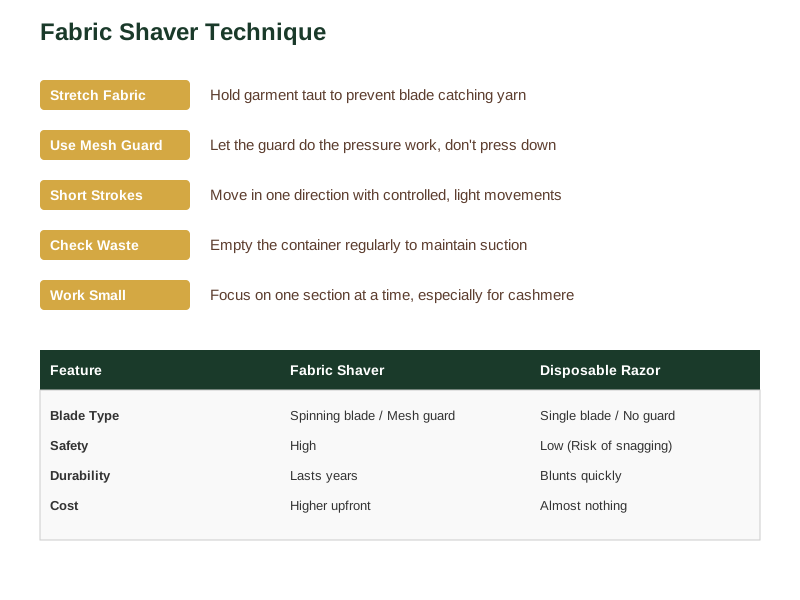
A fabric shaver uses a spinning blade beneath a mesh guard. The guard sits against the fabric, the blade spins just above it, and the pills get lifted into the guard holes and cut off cleanly. The crucial detail most guides miss is that the shaver only works properly when the fabric is held taut underneath. Loose fabric creates wrinkles, and a spinning blade in a wrinkle can catch the yarn itself, not just the pills sitting on top. That’s how holes happen. Stretch the fabric flat, keep it smooth, and the blade only ever meets the bobbles.
Basic models are perfectly adequate for most jobs. You’re often paying extra for build quality, a more comfortable handle, or a rechargeable battery — worthwhile features, but they don’t change the fundamental cutting action. Used correctly, an affordable version does the job well.
A fabric shaver cuts the bobbles off and restores a jumper’s look. The Philips Fabric Shaver, 8800 rpm (paid link) (8800 rpm, two AA batteries) is a straightforward option.
See Philips Fabric Shaver, 8800 rpm on Amazon → (paid link)
A disposable razor is the other option. With a light, short stroke and almost no pressure, it can slice off surface bobbles in a pinch. The problem is that razors blunt quickly, clog with fibres, and have no guard between blade and fabric. One slip of pressure and you’re snagging yarn. For a one-off emergency on a robust fabric, it might suffice. For regular maintenance on a cashmere jumper, it’s a risk that’s hard to justify when the alternative is safer and lasts years.
The trade-off is clear: a fabric shaver costs more upfront but wins on safety and long-term effectiveness. A razor costs almost nothing to start but loses on durability and safety margin. For anything you’d be sad to ruin, the shaver is the better pick.
The Correct De-pilling Technique
Lay the garment flat on a clean, firm surface — an ironing board is ideal. Stretch the fabric taut across the area you’re working on and keep it flat with gentle pressure from your other hand. Turn the shaver on and move it in one direction across the bobbled patch, using short, controlled strokes. Don’t press down — the guard handles that. Let the blade skim the surface.
📺 Watch: How to Remove Lint Balls/ Pilling From Clothes
Empty the waste compartment when it starts to fill; if it gets too full, the shaver loses suction and effectiveness. Light pressure and steady strokes give the cleanest results. When you’ve worked across one section, move the fabric and repeat. A heavily bobbled jumper might need two or three passes in different directions, but on a well-maintained item one pass usually suffices.
Take your time with delicate knits. Cashmere benefits from working in small sections and checking the fabric regularly. If you see any sign of the yarn being pulled or distorted, ease off the pressure immediately.
Preventing Future Bobbles
Once you’ve restored a jumper, keeping it that way involves managing friction and heat.
📺 Watch: How To Depill Knitwear - remove bobbles and fuzz like a knitting pro.
Wash knitwear inside out. This simple step is genuinely effective — the inside faces the drum’s agitation while the outer surface stays protected. Use a cool or low-temperature cycle and wash with similar fabrics: avoid mixing denim with wool, or heavy canvas with cashmere. Over-washing ages fibres faster than under-washing, so if a jumper isn’t actually dirty, air it instead.
When drying, never wring or twist knitwear — this stresses the fibres and creates conditions for breakages that become pills. Lay it flat to dry on a towel. Store jumpers folded, not hung. Hanging stretches the shoulders and adds sustained tension to the fibres, making them more prone to breaking and pilling in areas under strain.
Most household shortcuts for prevention lack strong evidence. Hairspray on bobbles, vinegar in the wash, special anti-pilling sprays — results are inconsistent. The practical steps above are what actually works.
Common Questions About Bobble Removal
Is a disposable razor safe for removing bobbles?
It can work on very light bobbling if you’re exceptionally careful — light, short strokes with minimal pressure. But it blunts quickly, clogs easily, and offers no guard to protect the yarn. For garments you care about, a fabric shaver is the safer choice.
Could a fabric shaver damage my jumper?
Used correctly on taut, flat fabric, no. The mesh guard prevents the blade from contacting the yarn directly. The critical step is stretching the fabric taut — if it’s loose or wrinkled, the blade can catch fibres. Get that right and it’s a safe process.
How frequently should I de-pill clothes?
It depends on wear frequency and friction exposure. For regular knitwear, checking every few wears and dealing with bobbles as they appear is easier than letting them build up over months.
Does pilling indicate poor quality clothing?
Not necessarily. Pilling is a natural result of friction and fibre length, affecting high-quality wool and cashmere as well as cheaper alternatives. A well-made garment is distinguished by how it behaves over many years and de-pilling sessions — the fibres remain sound. If bobbles keep appearing in the same spots repeatedly, the garment may be wearing out, which isn’t always a sign of poor initial quality.
The wash habit that slows the next crop of bobbles is simple: turn clothes inside-out, use a gentle cycle, and wash them with other soft items. This reduces the friction that causes pilling in the first place. For a deeper look at extending your clothes’ life, our guide on making clothes last longer covers this and other longevity techniques.
If you want a quick reference for fabric care mishaps — what to do first, what to avoid — there’s a free stain removal cheat sheet that covers key steps.
Get the Free Stain Removal Cheat Sheet
Related Guides
For a complete overview, see our How to Remove Pilling and Make Clothes Last Longer: UK Guide .
Sources & Further Reading
As an Amazon Associate we earn from qualifying purchases. The products linked above are ones we think are worth a look.
Note: General guidance only, verify details with a qualified professional or official source.