How to Remove Pilling and Make Clothes Last Longer: UK Guide
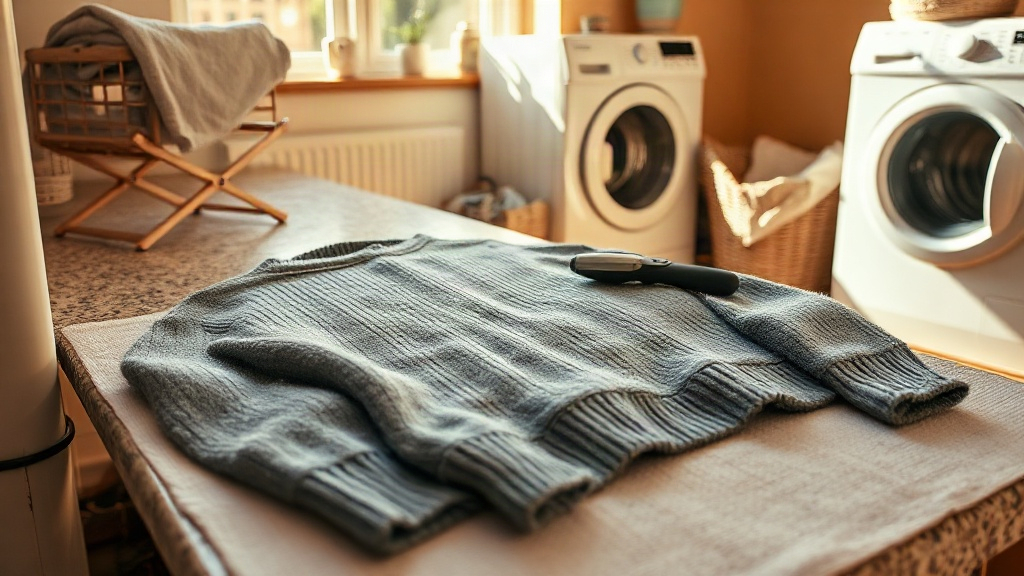
Pilling is caused by friction, not poor quality. An expensive merino jumper pills faster than a cheap acrylic one. The difference isn’t what you paid — it’s how much the fibres rub against each other and the world around them.
Once you understand this, the fix becomes obvious. You can’t buy your way out of bobbling, but you can manage it. Here’s how to remove the pills, stop new ones forming, and get more wear out of what you already own.
What Causes Pilling and Why It Isn’t Your Fault
Pilling is the formation of small, fuzzy balls on the surface of fabric — those little entanglements of fibre that catch the light and make a garment look tired. It happens when loose fibres break away from the yarn surface and tangle together. Friction is the cause, whether that’s from wear — a bag strap rubbing, the constant contact with a chair — or from washing, where garments rub against each other inside the drum.
📺 Watch: The ONLY Way I’d Remove Pilling From My Sweaters
This mechanism trips a lot of people up because they assume pilling means the fabric is cheap. It doesn’t. Even expensive cashmere pills. Merino wool pills. The reason is simple: natural fibres have shorter staple lengths than synthetic filaments, meaning there are more fibre ends available to break free and migrate to the surface. The White Company notes on their cashmere care page that bobbling is a natural characteristic of the fibre, not a defect. Woolmark’s guidance confirms that pilling is caused by friction and is a normal result of wear — something that happens to quality garments just as it happens to budget ones.
The technical bit, briefly: during wear and washing, the agitation causes short fibres — the ones that didn’t get fully locked into the yarn structure during spinning — to work their way out to the surface. Once there, they tangle with each other, form a pill, and sit there looking unsightly. The fabric underneath isn’t necessarily damaged — the pill is the visible symptom of a normal process. Understanding this matters because it changes what you do about it. You can’t buy your way out of pilling. You can, however, reduce the friction.
How to Remove Existing Pills
Once pills have formed, the job is mechanical: you need to separate the tangled fibres from the surface without cutting or damaging the surrounding yarn. There are three ways to do this, and the right one depends on how bad the pilling is and what the garment is worth to you.
📺 Watch: How To Depill Knitwear - remove bobbles and fuzz like a knitting pro.
Hand removal works for light pilling — the kind where there are a few pills scattered across the front of a t-shirt. After the garment has dried, you can gently pull individual pills off with your fingers or tease them away using your thumbnail. It’s slow for larger areas, but it’s free and carries zero risk of damaging the fabric. Do this before ironing, because heat can set any remaining pills more firmly into the weave.
A pilling comb is the next step up. The Clothes Doctor cashmere comb in beechwood (paid link) is a wooden comb made for this. Lay the garment flat on an even surface — a table covered with a towel is ideal — and use the comb in light, sweeping motions across the fabric. The comb’s fine teeth catch the pills and lift them away. The White Company specifically recommend this method for knitwear because it’s controlled and gentle. The mistake people make is pressing too hard, which can thin the fabric over time. Use light pressure and short strokes. For valuable cashmere pieces, this is the method to reach for before anything else. A comb costs very little and lasts years.
View Clothes Doctor cashmere comb in beechwood on Amazon → (paid link)
A fabric shaver is the fastest option for heavy pilling. The Philips Fabric Shaver, 8800 rpm (paid link) is battery-powered (two AA batteries in the box). The GLEENER Fabric Shaver & Lint Remover (paid link) is the manual one, with no batteries. Battery-operated fabric shavers work on the same principle as an electric razor: they cut the pills off flush with the fabric surface. They’re effective on thick knits and man-made fibres where pills tend to be numerous and firmly attached. The caveat is the same as with the comb: don’t press hard, and keep the garment taut on a flat surface so you don’t shave into the fabric itself. Some people reach for scissors instead, but that’s genuinely risky — you can slice through yarn and create a hole, which is a much worse problem than a few bobbles.
Check GLEENER Fabric Shaver & Lint Remover price → (paid link)
See Philips Fabric Shaver, 8800 rpm on Amazon → (paid link)
Here’s the short version of which to use when:
- A few pills on a cheap garment → hand removal
- Moderate pilling on anything you care about → pilling comb
- Heavy pilling across a thick knit → fabric shaver
- Any garment where the fabric has thinned noticeably → stop and assess before continuing
The pills will come back. That’s not defeat; it’s just the nature of the fibre. The goal isn’t to stop pilling permanently — it’s to manage it as part of normal garment care.
How to Stop Pilling Before It Starts
Removing pills is the reactive half of the job. Preventing them is the other half, and it’s the part that actually extends the life of your clothes. Prevention is cheaper and less effortful than constant de-bobbling, and the methods are well-supported by fabric-care guidance.
📺 Watch: Remove Pilling from Sweaters (clothing)
Wash clothes inside out. This is the single most effective step. Turning garments inside out means the outer face — the side that shows when you wear it — is protected from direct abrasion against other clothes in the drum. Woolmark explicitly recommends this as a prevention strategy . The friction is still there, but it’s on the inside of the garment where it matters less. Most people already do this instinctively for printed or embellished items; extending it to knitwear and frequently worn tops is a habit worth building.
Use a mesh laundry bag. Garments inside the bag still get washed, but they’re kept separate from direct contact with other items. This reduces the mechanical action they experience. For delicates — cashmere, fine knits, anything that pills quickly — a mesh bag is a small investment that pays off over many washes. The mesh also prevents straps and fastenings from catching and pulling.
Avoid fabric softener on knitwear and prone fabrics. This one surprises people because fabric softener feels like a care product — it makes clothes feel softer, so surely it’s good for them? Not always. Fabric softener coats fibres with a waxy layer that can alter their surface properties, and Woolmark advises against using it on wool , noting that excess softener can lead to pills. On these garments, skip it. Your laundry will be fine.
Wash on a gentler cycle and avoid high heat. Over-agitation and hot water accelerate fibre wear. Using a wool or delicates cycle — shorter, cooler, with more water and less tumbling — reduces the mechanical stress on fibres. Switching to gentler cycles — a wool or delicates wash with lower spin speed — reduces how quickly knitwear bobbles. This also applies during wear: a heavy backpack strap, a desk chair armrest, the friction points that build up over a normal day — you can’t eliminate all of it, but you can be aware of it.
A quick prevention checklist:
- Turn knitwear and jerseys inside out before every wash
- Use a mesh laundry bag for cashmere and fine knits
- Skip fabric softener on natural fibre garments
- Use a wool or delicates cycle with a low spin speed
- Wash less frequently — every wear isn’t necessary for low-odour garments
When a Garment Has Gone Past the Point of Return
Pilling is reversible. But there is a ceiling. If the fabric has thinned significantly — you can see the weave through the garment, or it feels papery rather than simply fuzzy — then the structure of the fibre itself is compromised. Removing pills from heavily thinned fabric can accelerate tearing because you’re cutting fibres that are already weakened. At that point, the honest advice is to consider whether the garment is worth continuing with.
If pills return very quickly after you’ve removed them — within a wash or two — that’s also a signal. It means the fibres are shedding faster than they can be managed, which points to either very poor-quality construction or a garment that has simply reached the end of its wearable life. Neither is a failure on your part.
Before you throw anything away, though: repairing or upcycling is worth considering. A hole can be darned. A worn item can be cut down into something smaller — a cashmere jumper becoming a snood, for example. Charities often accept repaired clothing, and there’s a growing community of menders online who can give advice on what to do with an old favourite.
Pilling Removal Methods Comparison
| Method | Best For | Risk Level | Cost |
|---|---|---|---|
| Hand Removal | Light pilling on cheap garments | Low | Free |
| Pilling Comb | Moderate pilling on valuable items | Low | Low |
| Fabric Shaver | Heavy pilling on thick knits | Medium | Medium |
| Scissors | Not recommended — high risk of damage | High | Low |
Frequently Asked Questions
Does pilling mean my clothes are low quality?
No. Pilling is caused by friction acting on fibres — it’s a property of the fibre type, not a quality judgement. Natural fibres like wool, cashmere, cotton and linen pill more readily than synthetic filaments because the fibres are shorter and more loosely held in the yarn. Even high-end cashmere jumpers will pill eventually. What separates a quality garment from a poor one is how it pills: good-quality cashmere produces fine, soft pills that are easy to remove; poor-quality fabric can pill into hard, matted clumps that are much harder to deal with.
Can I use scissors to remove pills?
Not safely. Scissors cut across the yarn rather than lifting the pills away from the surface, and it’s very easy to snip a strand of the underlying fabric at the same time. A pilling comb or fabric shaver is designed to deal with surface fibres without cutting into the structure beneath. If you’re dealing with a delicate fabric — cashmere, fine merino — this distinction matters.
Does fabric softener help with pilling?
No — it can make it worse. Fabric softener deposits a coating on fibres that changes their surface properties, and Woolmark advises against using it on wool garments. On knitwear and natural fibres, you’re better off skipping the softener and relying on a gentle wash cycle to keep the fibres intact.
Start with how to remove bobbles and pilling from jumpers and clothes — it’s the most direct guide to the actual removal methods. The other related guides cover why some fabrics pill more than others, how to make clothes last longer generally, and dealing with pet hair.
If you’ve found this useful and want a quick reference for the most common fabric problems — stains, shrinking, bobbling — you can Get the Free Stain Removal Cheat Sheet . It’s a printable checklist you can stick somewhere visible and refer to when something goes wrong.
Explore More Topics
- How to Remove Pilling and Make Clothes Last Longer: Questions Answered
- Why Do Some Clothes Pill More Than Others?
- How to Make Clothes Last Longer: The Everyday Habits That Actually Matter
- How to Remove Pet Hair from Clothes and Soft Furnishings
Sources & Further Reading
Note: General guidance only, verify details with a qualified professional or official source.