Do Heated Airers Actually Work, and Are They Worth It?
As an Amazon Associate we earn from qualifying purchases. This page contains affiliate links — if you buy through them, we earn a small commission at no extra cost to you.
People shopping for laundry solutions typically want two things: tumble-dryer speed and pennies-per-day running costs. A heated airer delivers neither. It wins on a third measure most buyers never weigh: it dries a full load overnight in a flat with no venting and no outdoor space, turning the damp, musty failure of natural drying into something that actually works.
Our Pick
- Everyday UK winter drying, no tumble dryer Heated airer with timer — costs roughly 42p per load, dries a full load in 3–4 hours overnight, and solves the musty-smell problem that natural drying causes in damp UK homes.
- Urgent drying or very damp flat Heated airer + dehumidifier + fan — cuts drying time significantly compared with the airer alone.
Fighting the Winter Damp: Why Natural Drying Fails
Natural drying sounds free and simple, but it runs into a brick wall every October in many UK homes. Cold external air holds very little moisture, and in a poorly ventilated or insulated room—which describes a lot of British flats and mid-terraces—that moisture goes nowhere fast. The thicker the garment, the worse it gets. Jeans, hoodies, towels: these hold water like a sponge, and if they are still damp after four or five hours, the smell starts. This is a fibre problem, not just a fragrance preference. Bacteria and mildew develop in trapped moisture, and once that odour is in the fabric, a second wash does not always shift it.
This core failure—natural drying creating musty-smelling clothes in cold, damp weather—is the main reason people turn to heated airers. They solve this by raising the temperature around the clothes, which lets the air hold more moisture and pulls water out of the fabric faster than cold air ever could.
How Heated Airers Work: The Low-Heat Difference
A heated airer is essentially a low-wattage heater shaped into a rack. The bars warm up gently, which raises the temperature of the surrounding air, and that warmer air absorbs moisture evaporating from the wet clothes draped over it. No tumbling, no spinning, no blast of hot air—just passive heat doing the same job that a warm room does, only faster and more reliably.
📺 Watch: Dry Soon Heated Airer Review
This distinction matters because a heated airer is easy to mistake for a tumble dryer. It isn’t one. It mostly dries where the fabric touches the bars, which is both a genuine limitation and a sign of what the product is for. The bars heat the fabric directly in contact with them, and the surrounding air helps with the rest. Turning clothes halfway through the drying cycle helps significantly with heavier items.
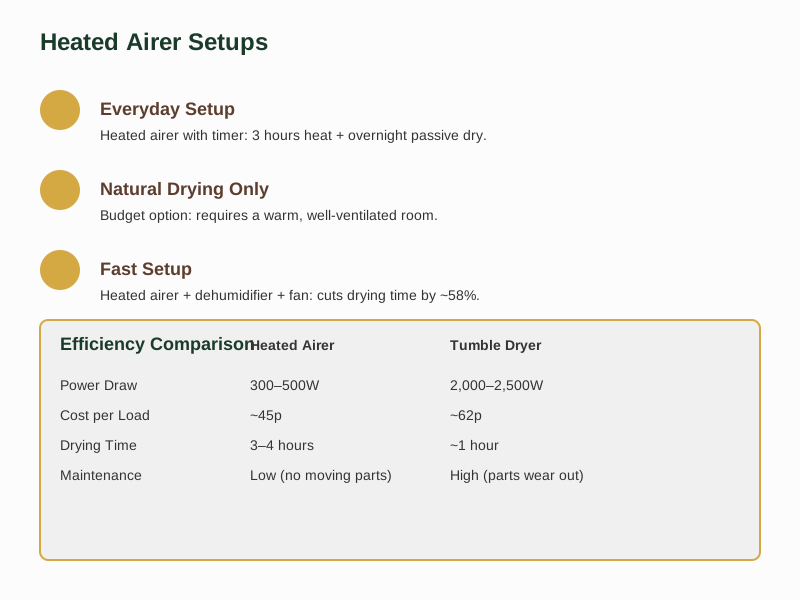
The wattage is low by design. Most heated airers draw between 300W and 360W—compare that to a tumble dryer pulling around 2,000W. That gap is where the cost saving lives. The trade-off is time: a tumble dryer can finish a load in an hour; a heated airer needs three to four hours of active heat. If you are in a flat with no outdoor space and no tumble dryer, that is still a better outcome than three days of natural drying and a damp-musty wardrobe.
Running Costs: The Real Numbers
Here is the number that makes the argument for heated airers. A typical heated airer running at 400W for four hours uses 1.6 kilowatt-hours. At the current UK electricity price cap of around 26p per kWh, that is about 42p per full load. While a direct cost-per-load comparison with tumble dryers varies, a heated airer uses significantly less electricity per hour—roughly five to six times less.
That said, the comparison only holds if you compare like for like on outcome. A tumble dryer gives you dry clothes in an hour. A heated airer gives you dry clothes in three to four hours, or overnight. If your priority is speed and you run the dryer every other day, the running cost gap adds up—but if you are replacing natural air drying that currently ends in musty clothes, the airer is genuinely cheaper and better at the job. The total cost of ownership also looks different when you factor in that a tumble dryer has moving parts that can fail, while a heated airer has no motor, no drum, and very little that can go wrong.
What you trade for the saving is space and time. A heated airer takes up a chunk of floor space for several hours. In a small flat, that matters. If you need something dry in a hurry for the morning, a heated airer alone won’t reliably get you there; you would need the airer plus a dehumidifier and a fan to cut the time down enough.
Three Real-World Setups That Deliver
Satisfied owners typically use one of three setups, depending on their situation.
📺 Watch: Dry Soon Deluxe Real World Review | The Gadget Show
The everyday setup is the heated airer with a timer function, used for three hours on heat followed by an overnight passive dry. The timer is worth spending a bit more on—it stops you wasting electricity running the heater after the clothes are dry. Leave windows slightly open or a door ajar to let moisture escape, and you wake up to dry, fresh-smelling clothes. This is the most reliable setup for daily use.
Natural drying only—the budget option—works if you have a very warm, well-ventilated room and can leave clothes for two days. In a centrally heated Victorian terrace with south-facing windows, this might just about pass. In most British flats in January, it is the path to the musty-smell problem described earlier.
The fast setup is heated airer plus a dehumidifier plus a pedestal fan. The MeacoDry Arete One 12L (paid link) is the dehumidifier in that trio: 12 litres a day, with a laundry mode. The fan circulates the air around the rack. Combining all three cuts drying time substantially compared with the airer alone. It is more equipment, more cost, and more setup—but if you have a damp flat or a household where someone needs dry school uniform by 8am, it is the setup that actually works.
See MeacoDry Arete One 12L on Amazon → (paid link)
What UK Buyers Say: Top Models and Considerations
The BLACK+DECKER 63099 3-Tier Heated Clothes Airer, 140 cm (paid link) holds up to 15 kg on 21 m of drying space across three tiers, arrives assembled and folds flat. Thick jumpers dry best on the top tier.
See BLACK+DECKER 63099 3-Tier Heated Clothes Airer, 140 cm on Amazon → (paid link)
The Oypla Extendable Heated Airer with Heated Wings (paid link) is the value pick. Heavier winter items like thick jumpers or jeans tend to need longer, or turning halfway through. For small-to-medium loads in a flat or a damp home, it does the job.
Buy Oypla Extendable Heated Airer with Heated Wings on Amazon → (paid link)
The feature worth prioritising, regardless of which model you choose, is a timer function. Skipping it tends to mean either over-drying clothes or forgetting to switch the unit off. A timer costs a few pounds more and is worth it.
Frequently Asked Questions
Can I leave a heated airer on overnight?
Yes, and it is actually the most energy-efficient way to use one. Set the timer to run for three to four hours on heat, then let the residual warmth finish the job overnight. Make sure the room has some ventilation—a slightly open window or door—so the moisture can escape rather than settling back into the walls.
Will a heated airer shrink my clothes?
Not if you are using it correctly. Heated airers operate at much lower temperatures than tumble dryers. Garments that can survive a warm wash in the machine will generally be fine on a heated airer. The usual care applies: check the label, and for anything marked “dry flat” or “do not tumble dry,” lay it flat over the bars.
Do heated airers use a lot of electricity?
No, significantly less than a tumble dryer. A typical heated airer draws 300–360W compared to a tumble dryer’s around 2,000W. A full load costs roughly 42p on a heated airer at current UK electricity rates. Over a winter of regular loads, that compounds into a meaningful saving.
Why do my clothes still smell musty after using a heated airer?
If the room is very damp, the airer’s heat alone may not be pulling moisture out fast enough. This is the situation where adding a dehumidifier or opening a window to improve airflow makes the difference. It is also worth washing musty-smelling clothes on a higher temperature wash first—the problem often starts in the washing machine, not on the airer.
The Bottom Line
Heated airers are worth it for anyone who dries clothes indoors most weeks. They are dead money for anyone who doesn’t. They solve the core problem that makes indoor drying miserable—damp, smelly laundry that never quite feels clean—at a fraction of the cost of a tumble dryer.
The catch is that they are slower and need space. If you need dry clothes in a hurry, a heated airer alone may not be enough.
For the stains that were on the clothes before they reached the airer, our free stain removal cheat sheet covers what actually works on each one, so you are not improvising when something goes wrong.
Get the Free Stain Removal Cheat Sheet — everything you need to handle the next laundry emergency with confidence.
Related Guides
Sources & Further Reading
As an Amazon Associate we earn from qualifying purchases. The products linked above are ones we think are worth a look.
Note: General guidance only, verify details with a qualified professional or official source.