Drying Clothes Indoors: The Complete UK Guide
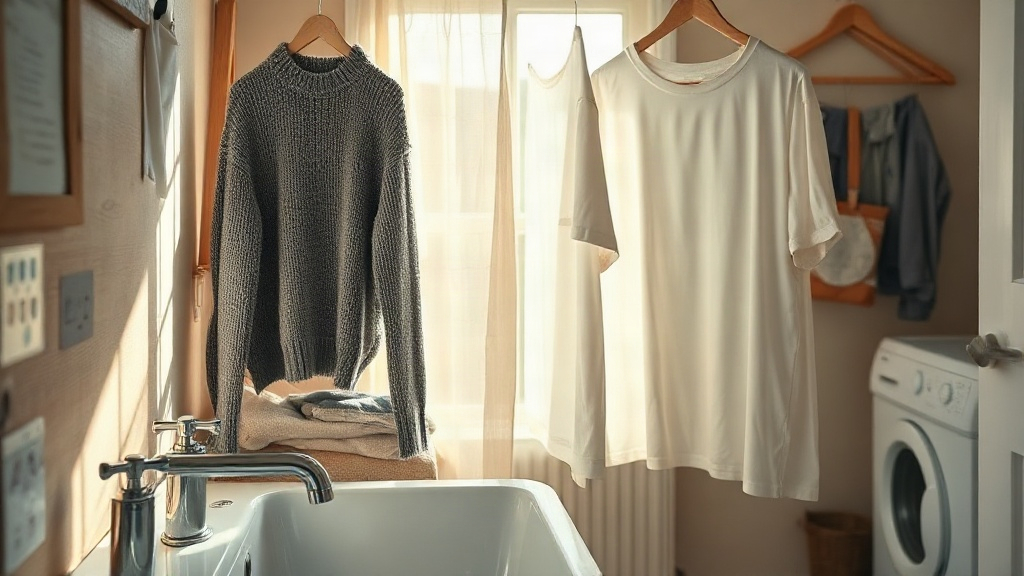
For roughly half the UK year, outdoor drying is a gamble. When rain persists for weeks and temperatures barely climb, indoor drying isn’t the backup plan—it’s the default. Yet most people treat it as improvisation: a towel over a chair, a jumper on the radiator. That approach risks mould and fabric damage. A proper indoor drying setup deserves the same consideration as your washing machine choice.
The three main methods—airer, dehumidifier, tumble dryer—work in fundamentally different ways. Understanding how each handles moisture is more important than comparing their speed or upfront cost.
Method recommendations by situation
- Regular large or daily loads, no ventilation constraints Tumble dryer — fastest and most convenient for frequent laundry, despite the running cost.
- Damp home, poor ventilation, or a bathroom as your only drying space Dehumidifier with a drying airer — removes the moisture that causes mould rather than just moving it around the room.
- Small household, light loads, room with an openable window Indoor clothes airer — zero running cost and fine for occasional use, but only if ventilation is genuinely good.
Understanding indoor drying methods
Standalone airers use your home’s ambient warmth to evaporate moisture from clothes. Unheated versions cost nothing to run, while heated models consume modest electricity—comparable to a small household appliance. They’re the most visible option in UK homes during colder months.
📺 Watch: Dry Clothes WITHOUT a Dryer (Using Indoors Drying Rack)
Tumble dryers mechanically circulate warm air through rotating clothes, removing moisture quickly but aggressively. They’re appliances of convenience, trading higher energy use for speed.
Dehumidifiers work differently: they extract water vapour from the air itself. By lowering room humidity, they create conditions where clothes dry more efficiently without adding heat directly to fabrics. This approach directly addresses the moisture problem that causes mould in sealed UK homes.
The real costs beyond the price tag
Outdoor drying remains free when weather permits, but from November through February, many households find it unreliable or impossible.
Unheated airers have zero running costs. Heated models add minimal expense—pennies per session—with the main outlay being the initial purchase. Stackable designs typically range from budget to mid-price options.
Tumble dryer costs are more substantial. Each load consumes significant electricity, with running costs that accumulate quickly for frequent users. Over a year, these expenses can reach hundreds of pounds alongside the machine’s purchase price.
Dehumidifiers represent a middle ground. Their energy use is moderate, and when used specifically for drying clothes, the cost is typically less than half that of a tumble dryer per load. For properties prone to dampness, the unit serves dual purposes—drying laundry while improving overall air quality.
The financial picture clearly favours airers for running costs, with dehumidifiers offering a balanced approach for homes needing moisture control.
Time versus convenience trade-offs
Households with high laundry volumes need to consider how quickly each method delivers dry clothes.
Tumble dryers are unmatched for speed. A standard cycle can complete in under two hours, allowing multiple loads per day. This convenience comes at the expense of fabric wear through heat and mechanical action.
Standalone airers are the slowest option. Drying times vary dramatically with room conditions: 12-24 hours in a warm living room, but potentially twice that in cooler spaces like hallways. This occupies significant space for extended periods.
Dehumidifiers used with airers typically reduce drying times by several hours compared to airers alone. The process is gentler on fabrics than tumbling, making it suitable for a wider range of garments.
For frequent, large loads, the tumble dryer’s speed often justifies its cost. For moderate volumes, the airer-dehumidifier combination provides reasonable speed without the same energy footprint.
Why moisture management matters most
Musty smells signal microbial growth on damp fabric. When laundry remains wet in still, humid conditions, microorganisms colonise the fibres—the odour is their metabolic byproduct.
Heated airers create a particular risk: they warm clothes, accelerating evaporation into the room without removing the moisture. In a sealed space, this effectively creates a low-temperature humidifier. The clothes feel warm but dry slowly while raising humidity levels.
UK housing compounds this problem. Older properties designed for natural ventilation now have draughts sealed, while modern builds are inherently airtight. Moisture from drying clothes has nowhere to escape. Public health guidance consistently identifies indoor drying as a contributor to dampness in such properties. Wet laundry releases substantial water vapour into indoor air—enough to cause problems in poorly ventilated spaces.
The consequence isn’t theoretical: condensation on walls, peeling wallpaper, black mould around windows, and persistent damp odours even in clean homes. This scenario is common in UK properties where drying happens without adequate airflow.
The solution isn’t a different heater—it’s moisture removal. Opening windows, using extractor fans, or running a dehumidifier prevents humidity buildup. A heated airer in a sealed room is among the worst choices for damp-prone homes.
Protecting delicate fabrics during drying
Different fibres have specific vulnerabilities that drying methods can exacerbate.
📺 Watch: Line-Drying Clothes: The Complete Guide (Step-by-step)
Wool and cashmere fibres have microscopic scales that interlock when exposed to heat and agitation, causing irreversible felting. Most wool garments shouldn’t go near a tumble dryer—even delicate cycles can cause gradual damage over multiple washes.
The correct approach: after hand-washing, gently press out water without wringing. Roll the garment in a towel to absorb moisture, then lay flat on a dry surface. Keep away from radiators and direct sunlight, which cause uneven drying and distortion. Cashmere’s lighter weight makes it particularly prone to stretching when hung wet.
With airers, drape wool items across bars rather than hanging. If using heated models, keep temperatures low. Dehumidifiers work well with delicates by removing moisture without direct heat application.
Silk is another protein fibre vulnerable to heat and light damage. Always air dry away from sunlight, never wring, and avoid radiators entirely. Flat drying preserves the fabric’s structure and sheen.
For a hand-washed wool jumper: rinse until water runs clear → press moisture out in a towel roll → lay flat and reshape → allow 24-48 hours to dry completely.
Choosing your approach
Your specific circumstances determine which method makes most sense.
Tumble dryer suits: Large households doing frequent laundry where speed outweighs cost concerns. Use lint filters regularly and avoid delicates unless labels specifically permit tumbling.
Dehumidifier with airer works for: Damp properties, poorly ventilated bathrooms, or flats without cross-ventilation. This combination addresses moisture at source while being fabric-friendly. Running costs are reasonable for the dual benefit.
Simple airer fits: Small households with light loads and rooms having good ventilation. Zero running cost and gentle on fabrics, but requires honest assessment of airflow. Without it, an airer becomes a mould risk.
Most UK homes with decent ventilation can manage with a standard airer. For cramped bathrooms with limited airflow, a dehumidifier transforms the equation. Families generating substantial laundry may find the moisture control justifies the extra step.
Common questions answered
Should I dry clothes inside or outside?
Outside is preferable when weather allows—it’s free and avoids indoor humidity. During UK winters, indoor drying becomes necessary. The critical factor is ventilation: without airflow, any indoor method risks moisture problems.
Is putting wet clothes on a radiator acceptable?
Technically possible, but ill-advised. Radiators heat unevenly, potentially damaging fibres and creating damp spots. More importantly, they continuously evaporate moisture into the room. In sealed spaces, this causes condensation behind radiators, leading to damp patches and mould. Use a proper drying rack with better airflow instead.
How can I speed up indoor drying?
Three effective approaches: use the washing machine’s highest spin cycle to remove more water initially; ensure active ventilation or dehumidification in the drying space; consider a heated airer but only with windows open. Dehumidifiers significantly reduce drying time by extracting moisture from the air. Tumble dryers remain fastest but with higher costs.
What’s the best way to dry wool?
Gently squeeze out water, roll in a towel to absorb moisture, then lay flat on a dry surface. Reshape while damp. Avoid radiators, sunlight, and never tumble dry unless the care label explicitly allows. The process is slower but preserves the garment’s quality.
Method comparison
| Method | Running Cost | Speed | Best Situation |
|---|---|---|---|
| Unheated Airer | None | Slow | Light loads, good ventilation |
| Heated Airer | Low | Moderate | Winter use with airflow |
| Dehumidifier + Airer | Moderate | Moderate | Damp homes, fabric protection |
| Tumble Dryer | High | Fast | High-volume, time-sensitive loads |
The upgrade that changes outcomes
Indoor drying in UK conditions is manageable when you control moisture rather than just applying heat. The single most effective upgrade for most households is adding a dehumidifier beside your airer. The MeacoDry Arete One 12L (paid link) is a 12-litre dehumidifier with a laundry mode, and it also has a HEPA filter. For the rack itself, the BLACK+DECKER 63099 3-tier heated airer, 140 cm (paid link) is the wider aluminium one, and the Oypla extendable heated airer with heated wings (paid link) is the folding horse. This combination addresses the root cause of mould risk while protecting fabrics from heat damage.
Check Oypla extendable heated airer with heated wings price → (paid link)
Buy BLACK+DECKER 63099 3-tier heated airer, 140 cm on Amazon → (paid link)
See MeacoDry Arete One 12L on Amazon → (paid link)
If you’re dealing with stains set by improper drying, our Stain Removal Cheat Sheet covers effective treatments for common problems.
Further reading
Related Guides
- How to Dry Clothes Indoors Without Them Smelling Musty
- Why Do My Clothes Smell Damp After Drying Indoors?
- Do Heated Airers Actually Work, and Are They Worth It?
- How to Stop Static Cling on Clothes
- How to Dry Clothes Faster Indoors in Winter Without a Tumble Dryer
- Why Do My Clothes Smell Sour or Stale After Washing (When the Machine Isn’t the Problem)?
References
This guidance is general in nature. Always check individual garment care labels and consult official sources for specific household safety advice.