My Wool Jumper Shrunk — Can It Be Fixed?

Yes, a shrunken wool jumper can usually be fixed, provided the fibres have not felted. Check the stitch definition: clear, sharp edges mean rescue is worth attempting, while a fuzzy, matted surface indicates the scales have permanently locked.
How heat locks wool fibres
Wool strands are naturally covered in microscopic, serrated scales. When fibres lie flat, they slide past each other freely, which gives wool its drape and elasticity. Combine that structure with heat and mechanical agitation, however, and the scales open up and catch against one another. They interlock and tighten. Textile researchers refer to this as felting. It is a cumulative physical process: a brief spin rarely causes lasting damage, but a prolonged hot tumble dry can lock the weave in place rapidly. Once the scales lock, the fabric loses its room to move, hardens, and reduces in size. No detergent or home remedy can force genuinely felted fibres apart.
📺 Watch: How to Fix a Jumper You’ve Shrunk in the Wash
Knowing when a rescue attempt will work
Severity dictates the outcome. If shrinkage is extensive, the fibre structure has typically felted beyond repair. Conditioning and stretching can soften the fabric and improve drape, but they will not restore the original dimensions.
Mild shrinkage, by contrast, offers a genuine window for recovery. The critical variable here is moisture retention. Working while the fabric is still damp gives the scales the pliability needed to guide them back into position. Once the wool dries completely and settles, that window closes. A rescue attempt carries the best chance of success when the shrinkage is minor and the garment has not been left to dry out fully for an extended period.
The conditioner soak technique
The process relies on relaxing the wool just enough to coax it back into shape. You are not reversing felting; you are using the remaining natural pliability in damp fibres to stretch the weave gently while it is in a softened state.
Step 1: Prepare the soak
Fill a basin or clean sink with lukewarm water. Avoid hot water, as it encourages further contraction. Add a gentle hair conditioner or a small amount of baby shampoo. A few capfuls is sufficient. Swirl the water until the product disperses evenly.
Step 2: Soak the jumper
Submerge the garment completely and leave it to rest for twenty to thirty minutes. Do not agitate, scrub, or wring the fabric. Press it down occasionally to keep it fully submerged and allow the conditioner to penetrate the weave.
Step 3: Drain and press
Allow the water to drain naturally. Press the jumper lightly against the basin walls to remove excess moisture. Twisting or wringing will stretch the fabric unevenly and distort the silhouette.
Step 4: Towel dry
Lay the jumper flat on a clean towel. Place a second towel on top and press down gently to draw out more water. The fabric should be damp, not dripping, before proceeding.
Step 5: Reshape and air dry
This stage determines the result. While the material remains pliable, guide it back toward its original proportions by hand. Work from the centre outward: ease the body wider, lengthen the sleeves, and pull the hem back down. Apply steady, even pressure rather than force. Lay the garment flat on an airer to dry naturally, or drape it over a padded coat hanger. Keep it away from direct heat or tumble dryers.
Active work usually takes around thirty minutes, followed by natural air drying. The method yields the best results when the initial shrinkage was minor and you intervened before the fibres dried out completely.
Steaming as a quicker backup
Extended soaking is not always practical. Steaming provides a faster alternative for situations where time is tight.
Hang the jumper on a padded hanger in the bathroom. Run a hot shower and close the door, allowing the room to fill with moisture. The damp air penetrates the weave, loosening the scales slightly. Once the fabric remains damp from the steam, remove it and gently guide it back into shape by hand.
Be aware that steaming tends to yield more modest results than a full conditioner soak. It relaxes the fibres passively rather than actively saturating them, making it harder to control the stretch evenly. This approach works best for minor shrinkage; for anything substantial, a wet soak remains the reliable path.
Shrinkage severity & likely outcome
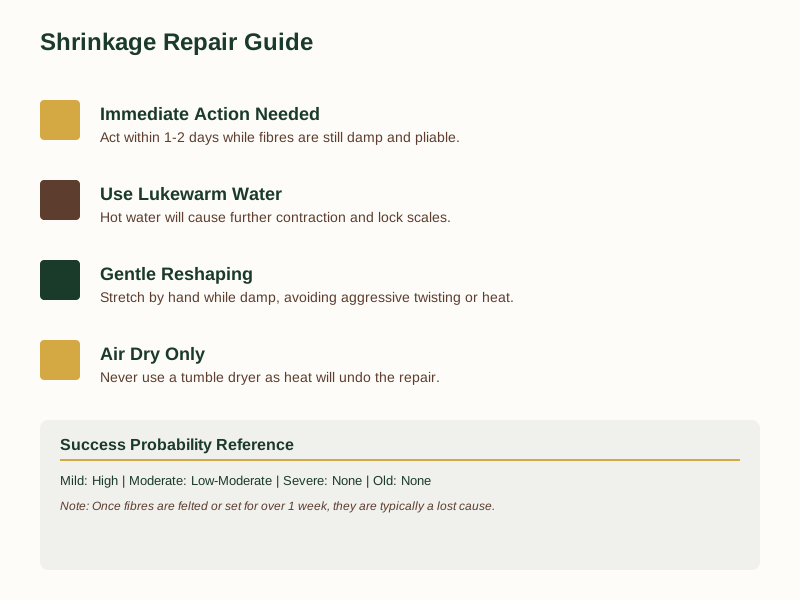
The chance of a successful repair depends heavily on the severity of the shrinkage and the state of the wool fibres. For mild shrinkage (around half a size down) where the fibres’ scales have not fully locked, a conditioner soak and reshape has a high probability of success. For moderate shrinkage (one full size down) with partially locked fibres, the same method has a low to moderate chance of working. If the shrinkage is severe (more than one size) and the fibres have felted together, or if the garment has been left to dry and set for over a week, no method is available to restore it.
Common questions on fibre recovery
Can I use hot water to unshrink wool?
No. Hot water encourages fibres to contract further and lock into their shrunken position. Always use lukewarm or cool water for any recovery process.
Will vinegar help unshrink wool?
Plain white vinegar can act as a mild fibre relaxant. It lacks the conditioning agents that soften wool effectively, so treat it only as an emergency substitute rather than a primary treatment.
Can I put the jumper in the dryer to speed up drying?
Absolutely not. Any heat from a tumble dryer will cause the fibres to contract again, potentially worsening the shrinkage. Air dry only—lay flat on an airer or drape over a padded hanger in a well-ventilated space.
What if the jumper is cashmere rather than standard wool?
Cashmere follows the same fundamental care principles. The fibre is finer and more prone to damage, so handle it with extra care during stretching. The basic soak-and-reshape technique remains safe, provided you use cool water and avoid force.
A successfully rescued jumper will be wearable again, though the hand may never feel exactly as it did before the wash cycle. Accept the new dimensions and move forward. For a routine that stops this from happening again, see our complete guide to preventing clothes from shrinking . If you’re dealing with a fresh stain alongside a damp rescue, keep the Free Stain Removal Cheat Sheet nearby for quick reference.
Related Guides
For a complete overview, see our How to Fix a Shrunk Jumper and Prevent Clothes Shrinking: Complete Guide .
Sources & Further Reading
Note: General guidance only, verify details with a qualified professional or official source.