How to Stretch a Shrunk Jumper Back to Size

The technique described here—blocking with pins to reshape knitted fabric—has been used by hand-knitters for over a century to finish and size their creations. That same principle can rescue a jumper that shrank in the wash.
Most shrunken wool and cashmere jumpers can be salvaged. Oxfam’s guidance confirms that shrunken clothes can often be restored with the right approach. The method matters: skipping the pinning step leaves you with a jumper that springs back to its shrunken size.
This article gives you the full process, including the critical blocking step that ensures the fibres set in their new shape as they dry.
Understanding the Shrinkage Mechanism
Wool fibres have a structure that works against you in the wash. Each fibre is covered in tiny scales—think of them as microscopic fish bones pointing in one direction. When heat, agitation, or harsh detergents get involved, these scales lock together and the fibres mat into a denser fabric. That is felting.
📺 Watch: Queen of Clean: How to un-shrink a sweater
The mechanism is physical, not chemical. The fibres haven’t been damaged in a way that requires replacement—they have simply rearranged themselves into a smaller configuration. Which means they can, in the right conditions, rearrange back.
Some detergents, particularly biological ones designed to break down proteins, can attack the wool fibre structure. Hot water and a fast spin cycle exacerbate the problem—the heat opens the fibre scales, and the agitation locks them together. A wool programme on your machine exists for a reason: slower agitation and cooler temperatures keep those scales flat rather than interlocked.
A quality wool or cashmere jumper represents a significant investment worth preserving.
Gathering Your Supplies
Before you start, get everything to hand. The process goes smoother when you aren’t hunting for items while a wet jumper is dripping on the floor.
What you need:
- A basin, bucket, or clean bath filled with lukewarm water—roughly hand-hot, around 30°C. Cold water won’t relax the fibres effectively; hot water will make things worse.
- A gentle hair conditioner or baby shampoo. The idea is to coat the fibre scales and reduce friction. You don’t need a specialist wool wash, though one won’t hurt.
- Clean towels for blotting—do not wring the jumper; just press water out gently.
- A flat surface for blocking—a blocking mat or a large clean towel on a spare floor.
- Rust-proof pins—stainless steel or brass dressmaking pins work; standard steel can leave marks.
That is the lot. No specialist equipment, no expensive products.
The Blocking Process: Reshaping Your Jumper
After soaking your jumper in lukewarm water with conditioner for 15–30 minutes, gently press—don’t wring—the excess water out. Lay it flat on your blocking mat or towel.
Now pin it.
This is the step that makes the difference. Pin the wet jumper to the mat in the exact dimensions you want it to be when dry. Use rust-proof pins every 10–15cm around the perimeter, stretching gently as you go.
Here is why this works: wet wool is malleable. The fibres can move relative to each other when they are saturated and warm. By pinning the jumper in the exact shape you want, you are holding it in that shape while the fibres dry. As they dry, they set in the configuration you have pinned them in—not the shrunken one they came out of the wash in.
Avoid using weights. Aggressive stretching creates uneven tension across the knit, resulting in a distorted pattern. Stretch gently and evenly. Let the pins do the work.
Leave it to air dry completely. This takes 24–48 hours depending on humidity and the weight of the knit. Do not speed it up with a radiator or tumble dryer—heat will cause the fibres to contract again. A room with good airflow, away from direct sunlight, is ideal.
When Reshaping May Not Work
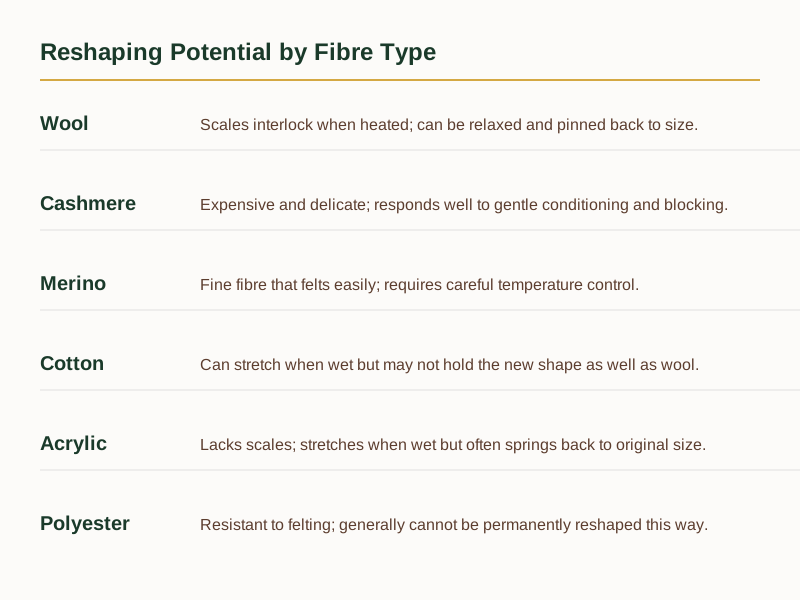
This method works best on natural fibres like wool, cashmere, and merino, which have a high reshaping potential. If your jumper is a synthetic blend (acrylic, polyester, or a mix where synthetic fibres dominate), you will find this approach has limited effect as these materials have low reshaping potential. Synthetic fibres don’t felt in the same way because they lack those scales—they can stretch when wet, but they don’t hold the new shape, and some synthetics will simply spring back to their original dimensions regardless of how carefully you pin them. Cotton offers a moderate reshaping potential; it can stretch when wet but may not hold the new shape as well as wool.
The method will not hold if the fibre has fully felted—the texture becomes compressed and matted, with visible individual stitches no longer apparent. At that point, you are looking at either a lost cause or a creative repurpose.
If the jumper genuinely cannot be saved, donating it to a textile recycling point is better than sending it to landfill.
Common Questions Answered
Can you unshrink any wool?
Most natural fibres like cashmere and merino respond well to this method. Synthetic blends are not as responsive—the fibres lack the structure that allows wool to be reshaped.
What if I don’t have a blocking mat?
You can use a large clean towel on a flat floor. The key is having a surface you can pin into. A dedicated blocking mat has a grid to help you pin evenly, but a towel works fine.
How long does the whole process take?
The soaking takes 15–30 minutes, the pressing-out and pinning another 10–15. The drying is the long part—24 to 48 hours for the fibres to set fully.
The process is straightforward once you know the blocking step exists. Soak, condition, press out, pin in the right shape, and leave it alone. Remember that this method will not work if the fibre has fully felted—our assessment guide helps you determine whether your garment has crossed that threshold.
Now you know what to do when the next wash goes wrong—get the Free Stain Removal Cheat Sheet to keep alongside your laundry routine. It is a useful reference for all the other mishaps that don’t involve a full rescue mission, just a quick response in the first few minutes.
Related Guides
For a complete overview, see our How to Fix a Shrunk Jumper and Prevent Clothes Shrinking: Complete Guide .
Sources & Further Reading
Note: General guidance only, verify details with a qualified professional or official source.