How to Stop Clothes Shrinking in the Wash or Dryer
Every wardrobe holds a quiet split: clothes that survive your current wash routine and clothes that don’t. The goal is simple — move every garment from the second pile into the first. The most common failure mode, particularly with knitwear, is heat-induced shrinkage. While many blame the wash cycle or detergent, the real culprit is almost always thermal energy that causes fibres to contract and lock.
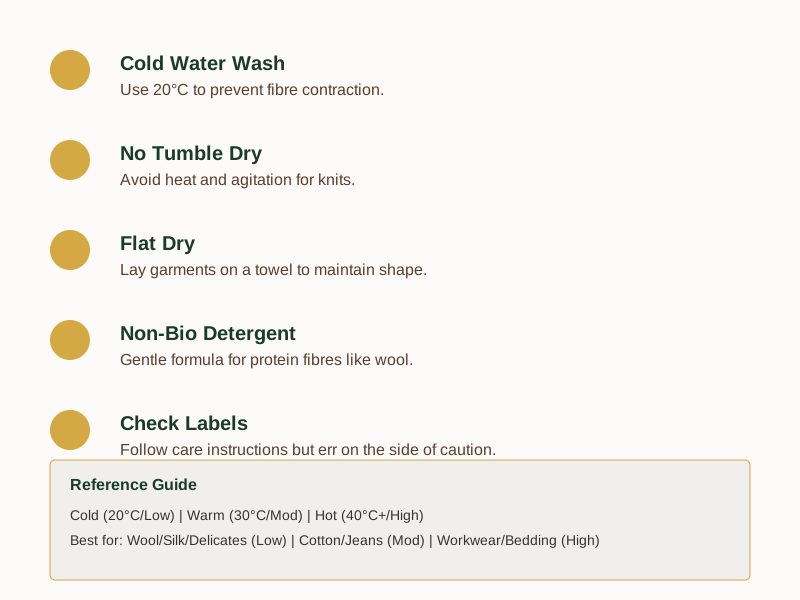
Conventional advice suggests switching to a gentle cycle with wool-specific detergent. This misses the critical point: gentle cycles often still use warm water, and warmth is what drives the fibre contraction that causes shrinkage. A more effective solution is cheaper and simpler: wash in cold water and keep knits away from the tumble dryer entirely.
This article explains the mechanics behind this approach, identifies other genuine preventative measures, and outlines recovery options for already-shrunk items.
Understanding the Two Types of Shrinkage
Fibre contraction happens through two primary mechanisms in natural fabrics like wool, cashmere, and cotton.
Relaxation shrinkage occurs when fibres absorb heat energy from warm water, causing their structure to loosen and then contract as they dry. This explains why a cotton T-shirt washed at 40°C can emerge noticeably tighter.
The more severe felting shrinkage affects wool and cashmere specifically. These fibres have microscopic surface scales that resemble tiny pine cones. Heat opens these scales, and mechanical agitation in the washing machine drum causes them to interlock. Once locked, they cannot be separated, resulting in a denser, rougher fabric. A soft cashmere cardigan can transform into coarse felt through this process, and the damage is permanent.
Many laundry guides overlook a crucial detail: while “gentle” or “delicate” cycles reduce agitation, they frequently still heat water to 30°C or 40°C. For wool blends, this warmth alone can cause measurable shrinkage. The cycle may be mechanically gentle but thermally hazardous.
Tumble dryers combine sustained heat with constant tumbling, creating ideal conditions for both relaxation and felting shrinkage. A hot dryer is remarkably effective at permanently altering woollen garments.
Practical Temperature Choices
The consensus on delicate cycles needs challenging. Special wash programmes offer limited protection compared to fundamental temperature control.
Cold water at 20°C provides the best protection. At this temperature, fibres lack the thermal energy required to open scales and interlock. Modern biological detergents activate effectively in cold water, contrary to older formulations that required warmth.
Manufacturer guidance supports this approach. Hotpoint’s recommendations emphasise that cooler wash settings clean effectively without damaging fabrics.
Even 30°C carries risk for wool blends and loosely woven cotton. While safer than 40°C, it isn’t cold. For items containing wool, cashmere, or high proportions of natural fibres, 20°C remains the safest setting.
Gentle cycles serve a specific purpose for very loose knits or items with delicate embellishments, but for standard wool jumpers, temperature control outweighs agitation reduction. Washing a knit at 20°C on a standard spin is safer than at 30°C on delicate. Modern biological detergents are also designed to activate effectively at lower temperatures (20°C to 30°C), making cold washing effective without cleaning penalties.
Additionally, choose non-biological detergent for protein fibres like wool, cashmere, and silk. Biological detergents contain enzymes designed to break down protein-based stains, which can damage the proteins in wool fibre over time.
The Tumble Dryer’s True Cost
If washing machines contribute to shrinkage, tumble dryers often cause the most severe damage through their combination of heat and mechanical action.
📺 Watch: 13 Hints And Tips On Using Your Tumble Dryer
The rule is absolute: never tumble dry knits, woollens, or cashmere items. Heated drying causes both relaxation and felting shrinkage, with felting being irreversible. The combination of heat and agitation causes direct shrinkage through felting; even low-heat settings involve tumbling that can felt fibres. Always opt for flat air drying.
Tightly woven cotton fabrics like towels, bedding, and jeans may sometimes survive tumble drying as they can stretch back during cooling, but this isn’t reliable. Never risk precious garments.
Items to keep away from tumble dryers:
- Wool and cashmere jumpers and cardigans
- Hand wash only labelled garments
- Silk items
- Loose-knit fabrics prone to stretching
- Garments with heat-sensitive embellishments
The alternative is air drying flat on a clean towel or using a heated clothes airer indoors. Heated airers operate at significantly lower temperatures than tumble dryers without tumbling action, making them safe for most delicate items. For wool jumpers, the optimal method is to lay them flat on a clean towel, reshape to original dimensions, and air dry away from direct heat or sunlight. Hanging wet knitwear stretches under its own weight, distorting the shape.
Recovery Methods for Shrunk Garments
Prevention significantly outperforms cure for shrinkage. Once fibres have contracted or felted, full restoration is often impossible.
📺 Watch: How to Fix a Jumper You’ve Shrunk in the Wash
For wool and cashmere with relaxation shrinkage, wet blocking offers the best chance of recovery. Soak the garment in cool water for 15-20 minutes, then gently press out moisture with a towel without wringing. Lay it flat on a dry towel and carefully stretch it back toward original dimensions, using hands rather than force. Rust-free pins can help maintain shape during drying. This method works poorly on felted items, which develop a permanently dense, rough texture.
Repeated washing at any temperature contributes to gradual shrinkage over time, highlighting the importance of consistent prevention through cold washing, flat drying, and tumble dryer avoidance. Care labels can be conservative; a 100% wool garment labelled “wash at 40°C” may still shrink at that temperature, particularly over repeated washes. When uncertain about natural fibres, choose colder temperatures.
The “superwash wool” treatment coats fibres to reduce felting risk, making garments machine-washable. However, it doesn’t prevent relaxation shrinkage from heat. Superwash wool jumpers can still shrink if washed at 40°C, reinforcing the need for cold water regardless of treatment.
Temperature and Risk Guide
| Setting | Temperature | Risk Level | Suitable For |
|---|---|---|---|
| Cold Wash | 20°C | Low | Wool, Cashmere, Silk, Delicates |
| Warm Wash | 30°C | Moderate | Cotton, Towels, Jeans |
| Hot Wash | 40°C+ | High | Heavy-duty workwear, Bedding |
| Delicate Cycle | 30°C | Moderate | Decorative items, Beaded knits |
| Tumble Dry | Variable | High | Tightly woven cotton, Towels |
| Air Dry | Ambient | Low | All knits, Wool, Cashmere |
Final Clarification on Drying Methods
The tumble dryer isn’t banned outright — it’s a tool with precisely two safe settings for most households: off, or reserved for towels and robust cotton items that can withstand the heat. For everything else, flat air drying preserves garment integrity.
The fundamental mechanism is clear: heat causes fibres to contract and lock together, while mechanical action makes that locking permanent. Removing heat through cold washing and avoiding the tumble dryer for delicates forms the core of effective prevention.
This three-point habit — cold wash, no tumble for knits, flat dry — protects jumpers more effectively than special detergents or gadgets. It’s straightforward but honest advice.
For readers dealing with a jumper that has already shrunk, our complete guide to fixing shrunk jumpers provides detailed recovery steps.
Related Resources
For comprehensive fabric care guidance, see our Delicate Fabric Care Guide: How to Wash Cashmere, Wool and Silk at Home .
References
Disclaimer: This article provides general guidance only. Always verify specific care instructions with garment labels and manufacturer recommendations.