Delicate Fabric Care Guide: How to Wash Cashmere, Wool and Silk at Home

As an Amazon Associate we earn from qualifying purchases. This page contains affiliate links — if you buy through them, we earn a small commission at no extra cost to you.
A hand dipped in a bucket, a crossed-out tumble dryer, a bucket with a number inside, a triangle with a cross through it. Every decision in this guide is already printed on a sewn-in label in these four symbols, and you were simply never taught to read them. The hand means exactly what it says. The crossed-out dryer is non-negotiable. The bucket’s number is a heat ceiling, not a suggestion. The crossed-out triangle protects protein fibres from chemical breakdown. Once you understand these four symbols, caring for cashmere, wool and silk becomes less about memorising rules and more about following the logic already built into your clothes.
By the end you’ll know precisely how to interpret these instructions for UK conditions, when hand-washing earns its reputation versus when it’s a faff you can skip, and why fabric softener in hard water areas creates a specific problem that most guides overlook.
What the Label Actually Means
Brands invest more effort in getting the care label right than almost anything else on the garment—and most people ignore it. That’s where a lot of damage happens.
The bucket symbol with a number inside tells you the maximum wash temperature in Celsius. One dot means 30°C, two dots means 40°C, and four dots means 60°C. Your cashmere and silk will almost always carry a 30°C instruction—and that ceiling exists because heat makes the fibres contract and can cause shrinkage, especially in wool. Don’t read “30°C maximum” as a suggestion you can safely push to 40°C when the load looks light. For delicate fibres, it isn’t.
Lines underneath the bucket change the instruction. A single underline means a gentle cycle (shorter, slower agitation). A double underline means a delicate or very gentle cycle. No underline means a normal cycle—which you should not use on cashmere or silk.
The hand wash symbol—a hand dipped in the bucket—means exactly what it says. Some machines have a dedicated hand-wash programme that mimics this by using cooler water and a slow tumble. If the label says hand wash and your machine has that programme, you’re usually fine to use it. If the machine doesn’t have one, hand wash in the sink.
The triangle symbol is for bleach. An empty triangle means any bleach is fine. A crossed-out triangle means don’t use it. Most delicate fabrics carry the crossed-out triangle for good reason—bleach degrades protein fibres like wool and silk at a chemical level.
The square is drying. A crossed-out tumble dryer symbol means air dry only, full stop. Placing a cashmere sweater in a tumble dryer is one of the most reliable ways to shrink it, and once wool fibres have felted together, there’s no reversing it.
The Mechanics of Washing
Here’s why each step matters, not just what to do.
📺 Watch: How To Hand Wash: A Dry Cleaner’s Guide
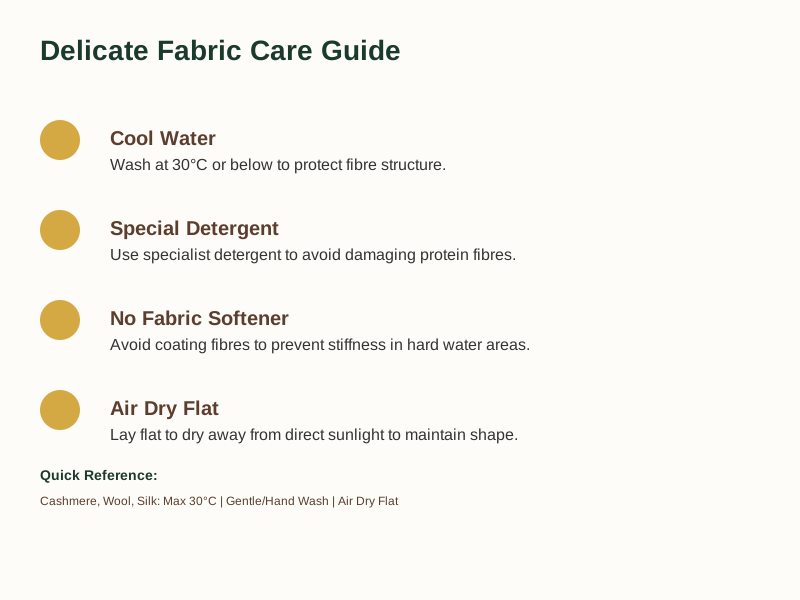
Water temperature is non-negotiable for delicate fibres. Wash cashmere, wool and silk at 30°C or below. The fibres are held together partly by their structure, and heat disrupts that structure in a way that cold water doesn’t. Cold water cleans effectively—what it doesn’t do is set stains, which is exactly what you want when you’re trying to remove something rather than lock it in.
Detergent choice matters more than most people realise. Standard biological detergents contain enzymes that break down proteins—which is brilliant for food stains, but actively damaging to wool and silk, both of which are protein fibres. Use a specialist detergent designed for delicate fibres. Eucalan is a popular no-rinse formula that keeps wool and cashmere soft without needing a separate rinse cycle—agitation you’d otherwise add. Woolite is another option, though the linked bottle is a 16 oz US import, so it usually costs more than UK delicates washes. If you’re watching spend, a gentle liquid detergent like Ecover Delicate Laundry Liquid, Waterlily & Honeydew, 750 ml (paid link) is plant-based and gentle, though it is scented (waterlily and honeydew).
See Ecover Delicate Laundry Liquid, Waterlily & Honeydew, 750 ml on Amazon → (paid link)
A UK-specific mistake that most guides miss: fabric softener is generally not recommended for delicate fibres. It coats the fibres with a cationic surfactant that reduces their natural breathability, and in many parts of the UK with hard water—particularly London, the South East, and much of the Midlands—calcium ions in the water react with that coating to leave a visible white residue that cannot be rinsed out easily. The garment ends up stiff and slightly chalky-looking. This isn’t speculation about a rare problem; it’s a well-understood interaction between water chemistry and a common product. If you live in a hard water area and you’ve ever wondered why your freshly washed wool feels slightly rough, the fabric softener in your drawer is a good place to look.
For hand-washing, fill a clean basin with cool water and add your detergent. Submerge the garment and gently work the water through it—don’t wring or twist. Leave it for ten to fifteen minutes, then rinse in cool water at the same temperature. Press out excess water with a clean towel; don’t spin or twist.
For machine washing, turn the garment inside out and fasten any buttons. Slip out bra straps if you’re washing tops—they cause uneven wear and can catch on other items. Place delicate pieces in a mesh wash bag or, if you don’t have one, a clean pillowcase tied shut. This protects the surface from drum abrasion. Use a gentle or delicate cycle at 30°C with the slowest spin available.
The common mistake owners make is treating “delicate cycle” as licence to add more garments. A packed drum means more friction, more tangling, and more stress on fibres. Keep the load light.
If you’ve just worked through the washing steps and want a quick reference for what to do and what to avoid, get the free stain removal cheat sheet —it covers the key decisions in a printable format.
Drying and Keeping Shape
Heat is the second biggest threat to delicate fibres, after agitation. Once you’ve washed something carefully, undoing it in the dryer defeats the purpose entirely.
Lay the garment flat on a clean, dry towel. Reshape it gently with your hands—don’t stretch it, but do make sure the seams are aligned and the garment sits at its natural dimensions. Roll the towel with the garment inside to absorb excess water, then unroll and leave it flat to dry on a fresh towel or a drying rack.
Never hang wet wool or cashmere—the weight of the water stretches the fibres and the garment loses its shape permanently. Once it’s dry, you can hang it, but not before.
Avoid direct sunlight while drying. UV light fades colours and degrades delicate fibres over time. This matters particularly for silk, which can yellow in strong sunlight. Dry in shade, ideally somewhere with good airflow.
When it comes to storage, padded or wooden hangers are worth the investment for knitwear and delicate tops. Wire hangers create pressure points and can poke through lighter fabrics—a problem that builds up gradually. For cashmere and wool that’s being stored seasonally, clean it before putting it away. Dirt and oils attract moths, and a clean garment in an airtight bag is far better protected than a stained one.
A fabric shaver is genuinely useful for keeping cashmere and wool looking good over time. Pilling is normal—it happens to every knitwear as fibres break at friction points—and removing the pills makes the garment look almost new. The Philips Fabric Shaver is simple to use; it runs on two AA batteries rather than a rechargeable cell, so keep spares handy. The GLEENER Fabric Shaver & Lint Remover (paid link) is a manual, battery-free alternative that works well for people willing to put in the elbow grease—it requires more effort than an electric shaver but produces good results on pilling.
Check GLEENER Fabric Shaver & Lint Remover price → (paid link)
Quick Care Reference
| Fibre | Max Temp | Cycle | Drying Method |
|---|---|---|---|
| Cashmere | 30°C | Gentle or Hand Wash | Air dry flat |
| Wool | 30°C | Gentle or Hand Wash | Air dry flat |
| Silk | 30°C | Gentle or Hand Wash | Air dry flat (no direct sunlight) |
Wrapping Up
Cool water, never wring, dry flat—these three rules unify the care of cashmere, wool and silk. They protect the fibres from heat damage, physical stress, and distortion. The care label gives you the boundaries; these principles show you why those boundaries matter.
A well-cared-for cashmere jumper can last a decade. A silk blouse washed correctly at home stays soft and bright in a way that repeated dry cleaning simply doesn’t achieve. These garments are an investment, and the daily care is simpler than the care label makes it look.
For more specific guidance, see our guides on washing cashmere at home , washing wool jumpers without shrinking , and caring for silk clothes .
Explore More Topics
Quick answers:
Go deeper on specific topics:
- How to Wash Cashmere at Home — Hand Wash or Machine, and What Actually Ruins It
- How to Wash a Wool Jumper Without Shrinking It
- How to Care for Silk Clothes Without Ruining Them
- Can You Wash “Dry Clean Only” Clothes at Home?
- How to Soften a Wool Jumper That’s Gone Stiff or Scratchy
- What Temperature Should You Actually Wash Different Fabrics At?
References
As an Amazon Associate we earn from qualifying purchases. The products linked above are ones we think are worth a look.
Note: General guidance only, verify details with a qualified professional or official source.