How to Wash a Wool Jumper Without Shrinking It
As an Amazon Associate we earn from qualifying purchases. This page contains affiliate links — if you buy through them, we earn a small commission at no extra cost to you.
The Woolmark machine-washable certification requires a wool garment to survive a 40°C wash cycle with specific agitation parameters—this industry benchmark shows the tolerances built into wool that make shrink-free washing possible when you manage the same variables. Wool jumpers are not cheap, and the fear of pulling one out of the wash looking like it belongs to a child is entirely reasonable. Shrinkage is real, it happens fast, and once it’s done, there’s no undo button you can reliably trust. The good news is that shrinkage is almost entirely preventable — it just requires understanding what wool actually is and why it behaves the way it does when wet.
This guide covers the two practical washing methods (hand wash and machine wash), explains the drying step that most articles skip entirely, and tells you when you don’t need to wash the garment at all.
How Wool Fibres React to Washing
The short version: wool fibres have microscopic scales on their surface, a bit like a strand of Velcro. When those scales are exposed to heat and agitation, they lock together and the fibres consolidate — this is called felting, and it’s what turns a perfectly good jumper into something you can only describe as “a keepsake for a much smaller person.”
📺 Watch: How to Wash A Wool Sweater, With Rajiv Surendra
Hot water makes the fibres relax and contract simultaneously. Agitation — rubbing, twisting, scrubbing, or a tumble dryer spinning at speed — forces those scaled fibres to mesh with each other. Both together is the worst-case scenario. One without the other is manageable. Neither is the goal.
The Woolmark Company’s care guidance is clear on this: heat and mechanical action are the two things you manage in any washing approach, whether by hand or machine. The mechanism is the same regardless of method — you’re just controlling the variables differently.
What people often don’t realise is that shrinkage isn’t always immediate. A single warm wash might not felt a jumper outright, but it can start the process — the garment may feel tighter after a wash, becoming progressively smaller over several cycles. The gradual shrink is what catches people out.
Hand Washing: Maximum Control
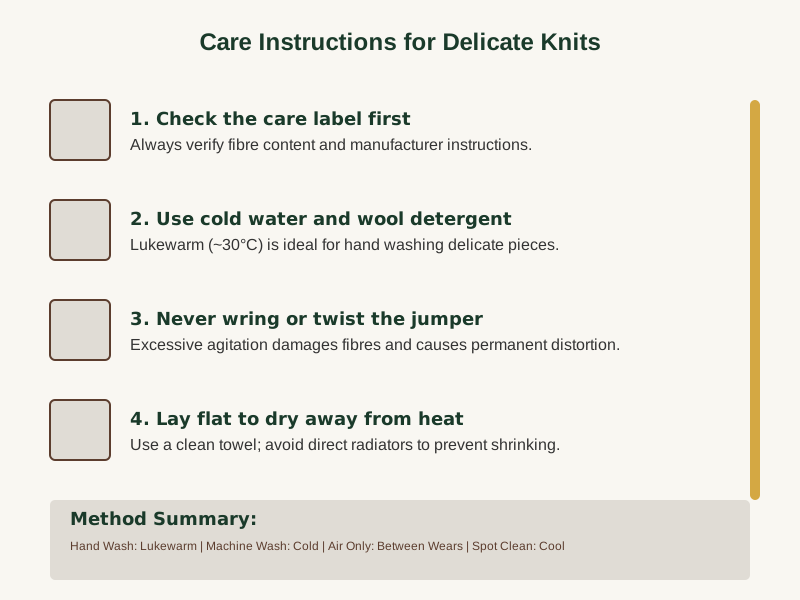
Hand washing gives you the most control, which makes it the right call for expensive or frequently worn jumpers where the stakes of getting it wrong are higher. The principle is straightforward: keep water lukewarm (around 30°C — your wrist is a better judge than a thermometer), use a detergent formulated for wool, and never apply force where you can apply patience instead.
📺 Watch: How to Hand Wash Delicate Knitwear Without Ruining It
Fill a basin or clean sink with lukewarm water and add your wool detergent — a small amount goes a long way. Eucalan Delicate Wash, unscented, 500 ml (paid link) is formulated for knitwear and doesn’t require rinsing out, which simplifies the process. Woolite Extra Delicates Care, 16 oz (paid link) is commonly found in UK supermarkets and is also suitable. Both are better than a standard detergent, which can strip the natural oils from the wool and leave it feeling rougher over time.
Check Eucalan Delicate Wash, unscented, 500 ml price → (paid link)
View Woolite Extra Delicates Care, 16 oz on Amazon → (paid link)
Turn the jumper inside out, submerge it, and gently slosh it through the water — don’t scrub or twist. Let it soak for about ten minutes. Drain the basin, then rinse with water at the same temperature, followed by cooler water to finish. The key principle throughout: no wringing. Not once. Not even a little.
For people washing a cashmere blend or a particularly fine Merino, the case for hand washing is strong. A bad machine cycle on an expensive Merino is a costly lesson compared to multiple careful hand washes.
Machine Washing for Regular Use
Hand washing is reassuring, but it’s also a bit of a faff if you’re washing several jumpers or doing it every couple of weeks. Machine washing on a wool or delicate cycle is genuinely fine — the method is repeatable and consistent, which matters when you’re doing it regularly rather than as a one-off rescue operation.
Check the care label first. Some jumpers have a hand-wash-only instruction, and that instruction should be respected — a label that says “dry clean” is different from one that says “hand wash,” and conflating the two is a common mistake, as explained by Woolmark’s care symbol guide . Machine washing a hand-wash-only garment is the shortcut to the shrinkage problem you’re trying to avoid.
Assuming the label allows machine washing, set the machine to its wool or delicate cycle — these run cooler and use slower, gentler drum action than a standard wash. Use cool water as specified for the cycle. Turn the jumper inside out, or put it inside a laundry mesh bag, which reduces surface abrasion against the drum. Use a wool-approved detergent. That’s the full method.
What you do not do: use a normal 40°C cotton cycle, add fabric conditioner, or tumble dry unless the care claim specifically permits it. Woolmark notes that some wool garments can be tumble dried if the label allows, but for those marked ‘do not tumble dry’, the heat and mechanical agitation will felt or shrink a jumper reliably.
The Overlooked Drying Technique
Here is the bit that almost every article on this topic omits, and it’s the step that separates a jumper that keeps its shape from one that gradually distorts even when you’ve done everything else correctly.
After washing — whether by hand or machine — do not wring or twist the jumper to remove water. I know it feels efficient. Don’t do it. Twisting wet wool can create forces that pull fibres in different directions, and because wool is more pliable when wet, the fibres may stretch and settle unevenly. That uneven settling is what causes the lopsided, distorted shape that often looks like shrinkage but is actually the garment being pulled out of true.
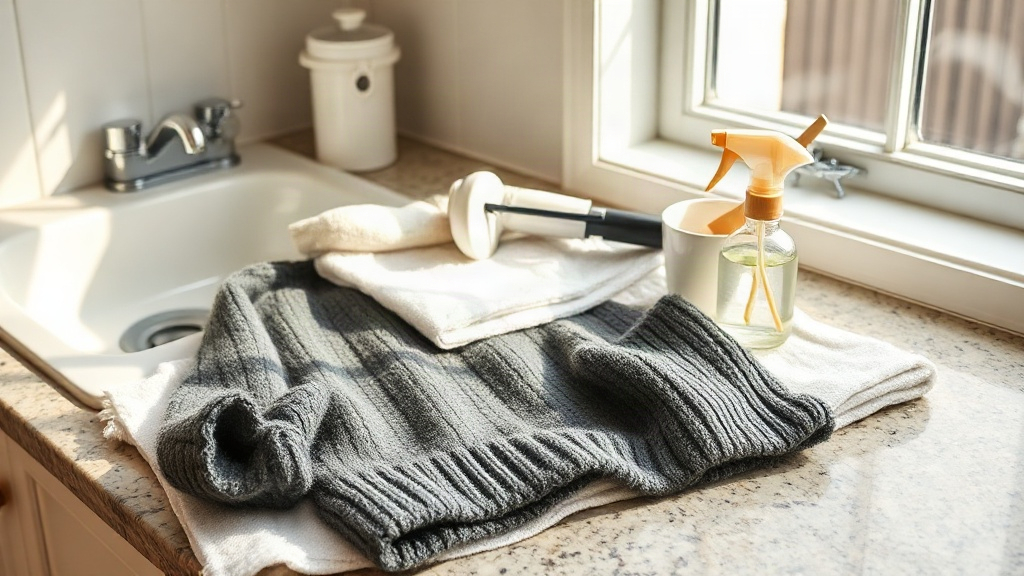
Instead: lay the jumper flat on a dry towel, roll the towel up with the jumper inside, and press down firmly. The towel absorbs the water — no pulling, no twisting, no force applied to the fibres themselves. Once you’ve pressed as much water out as you can, unroll and transfer the jumper to a fresh dry towel laid flat.
Shape it gently back to its original dimensions — this is the moment to do it, while it’s wet and pliable. Then leave it flat to dry completely, away from direct sunlight or direct heat. An airing cupboard is ideal; a flat surface in a warm room works fine. Hanging wet wool causes it to stretch under its own weight, which is a different problem to shrinkage but just as permanent.
The flat-dry instruction comes up in almost every care guide, but the towel-rolling step before it rarely does. That absence is the gap this article is designed to fill.
Reducing Wash Frequency
This is the part that extends a jumper’s lifespan the most, and it’s the step most people skip because it doesn’t feel like doing something.
📺 Watch: How To Wash a Dry Clean Only Sweater At Home Without Shrinking It
Wool doesn’t need frequent washing . Between wears, airing the jumper — ideally overnight, inside out, somewhere with a bit of airflow — removes surface odours and lets it recover its shape. This is enough for a jumper worn over a shirt or T-shirt. Spot cleaning a small mark with a damp cloth and a tiny amount of wool detergent is almost always preferable to a full wash, because a full wash is always a small calculated risk, however well you manage it.
The thinking here is cumulative. Each wash, even a careful one, applies some stress to the fibres. Minimising washes is minimising exposure to that stress. For good-quality Merino or cashmere, airing between wears can significantly reduce how often a full wash is needed.
Wool Care Method Comparison
| Method | Best For | Water Temp | Detergent | Drying Method |
|---|---|---|---|---|
| Hand Wash | High-value or delicate pieces | Lukewarm (~30°C) | Wool-specific | Flat dry on towel |
| Machine Wash | Regular wear, multiple items | Cool (cycle specified) | Wool-approved | Flat dry on towel |
| Air Only | Between wears, freshening | N/A | N/A | Flat dry on hanger |
| Spot Clean | Small stains | Cool | Wool-specific | Air dry flat |
Frequently Asked Questions
Can I tumble dry a wool jumper?
Only if the care label explicitly states it is safe to do so. For garments marked ‘do not tumble dry’, the sustained heat and mechanical agitation are exactly the conditions that cause felting and shrinkage. Air drying flat is the only reliable method for these items.
Can I use regular laundry detergent on wool?
It’s a risk. Standard detergents are formulated for cotton and synthetic fibres, and they can be too harsh for wool’s natural oils, leaving it rougher and more prone to shrinkage over time. A dedicated wool detergent costs a few pounds and lasts months of regular hand washes — it’s penny wise.
How often should I wash a wool jumper?
Only when it’s visibly soiled or starting to smell in a way that airing won’t resolve. For most people, once every four to six wears is plenty. Airing between wears keeps it fresh enough in between.
The two paths here — hand washing for high-value or delicate pieces, machine washing on the wool cycle for regular wear — are both sound. What matters is the temperature, the detergent, and the drying step at the end. Get those three things right and the method you choose matters far less than people think.
This guide focuses on preventing shrinkage during washing. For the full picture of long-term wool care—including how to handle the stiffness or pilling that can develop over repeated washes—our Delicate Fabric Care Guide: How to Wash Cashmere, Wool and Silk at Home covers the complete maintenance protocol.
If you’ve found this useful and you’re working through a specific stain or fabric-care problem, the Free Stain Removal Cheat Sheet is a quick reference guide to the fastest correct approach for the most common mishaps — worth having to hand next time something goes wrong rather than working it out in a panic.
Sources & Further Reading
As an Amazon Associate we earn from qualifying purchases. The products linked above are ones we think are worth a look.
Note: General guidance only, verify details with a qualified professional or official source.