How to Wash Cashmere at Home — Hand Wash or Machine, and What Actually Ruins It

The cashmere you find on the UK high street typically falls into two quality grades: Grade A and Grade B. Grade B cashmere uses shorter, coarser fibres that are significantly more vulnerable to the common washing mistakes this article covers.
As an Amazon Associate we earn from qualifying purchases. This page contains affiliate links — if you buy through them, we earn a small commission at no extra cost to you.
That label saying ‘dry clean only’ makes every wash feel like a gamble—especially when you paid more than you’d like to admit for that jumper. The internet is split: one side says machine washing is fine if you’re careful; the other treats it as a sure way to ruin a £150 garment. This confusion stems from a misplaced focus on the method—hand wash versus machine—when the real risks lie elsewhere.
What actually ruins cashmere isn’t the tool you use, but the conditions you create: excessive agitation and incorrect chemistry. Control these two factors, and the method becomes a matter of convenience rather than safety.
Understanding Cashmere’s Fragility
Cashmere is a protein-based fibre, similar to human hair, sourced from the undercoat of cashmere goats. Its structure makes it lightweight and warm, but also more responsive to heat, moisture, and friction than many other fabrics.
📺 Watch: Wash Your Cashmere At Home| luxury minimalist wardrobe
Three main factors cause damage:
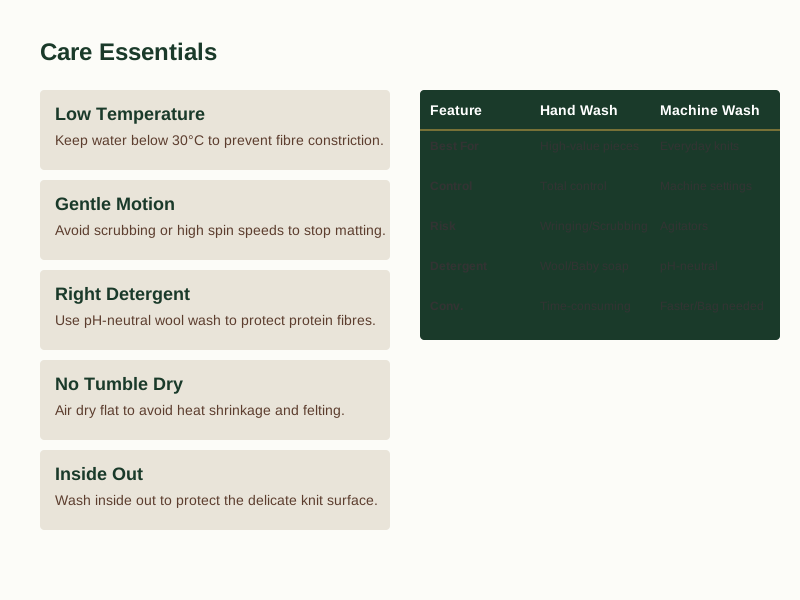
Heat makes the fibres constrict and lock together—a process called felting. This happens when water temperature is too high or during tumble drying, creating a dense, matted mass that cannot be reversed.
Agitation—rubbing, scrubbing, or tumbling the fibres while they’re wet—causes matting and distortion. This is why a jumper can come out of a wash a size smaller, even in cold water. Vigorous hand scrubbing or a standard machine spin cycle can felt cashmere at just 20°C.
Incorrect chemistry, specifically alkaline substances found in standard laundry detergents, weakens the fibres over time. Protein fibres absorb alkalies readily, leading to uneven swelling, stretching, and gradual shape loss.
The key principles to remember are low temperature, minimal movement, and a pH-appropriate detergent.
Hand Washing Cashmere Safely
For high-value or delicate cashmere pieces, hand washing offers the most control. You manage the water temperature, detergent, and can avoid mechanical tumbling entirely.
📺 Watch: How To Hand-wash Cashmere at Home
Fill a clean sink or large bowl with lukewarm water, no warmer than 30°C. Add a specialist wool or cashmere detergent. Eucalan Delicate Wash, unscented, 500 ml (paid link) is a popular choice—gentle on fibres with a no-rinse formula that reduces handling. The trade-off is its price; a small bottle doesn’t go far. For a cheaper one-off alternative, a small amount of Johnson’s Baby Daily Shampoo, 500 ml (paid link) can work, though it isn’t specifically formulated for wool. The detergent’s pH matters more than many realise—it’s about fibre protection as much as cleaning.
Check Johnson’s Baby Daily Shampoo, 500 ml price → (paid link)
See Eucalan Delicate Wash, unscented, 500 ml on Amazon → (paid link)
Turn the garment inside out. Submerge it and press the water through the fabric gently—avoid scrubbing or wringing. Let it soak for five to ten minutes, then drain the water and press the excess out against the sink side. Roll the jumper in a clean towel to absorb moisture, then lay it flat on a fresh towel to dry, reshaping it as you go.
A common error is scrubbing at stains. Even light rubbing can felt a patch, making it look darker and denser. Instead, spot treat by applying a small amount of detergent with your fingertip and pressing gently.
If you’re unsure which detergent to pick, grab our free checklist —it covers what to look for in a wool wash and which products offer good value.
Machine Washing: When It Works
Machine washing cashmere on a wool cycle can be a reliable option for everyday pieces you wear frequently. In some cases, it’s more consistent than variable hand washing techniques.
A modern front-loading machine’s wool cycle uses a slow tumble with long pauses. This motion is often gentler than the scrubbing people sometimes apply during hand washing. Use a pH-neutral wool detergent like Woolite Extra Delicates Care, 16 oz (paid link) to avoid alkaline damage. Set the temperature to 30°C and the spin to the lowest setting.
See Woolite Extra Delicates Care, 16 oz on Amazon → (paid link)
Top-loading machines with agitators create much more mechanical action and are not suitable for cashmere. If you only have a top-loader, hand washing is safer. Even with a front-loader, use a laundry bag to protect against the drum catching loose threads.
Opinions on machine washing are divided. Some sources endorse it for sturdy weaves; others advise against it for delicate knits. For a fine-gauge, loosely spun piece you treasure, the risk may not be worth it. For a regular crew neck, machine washing with the correct settings is a practical, low-risk approach.
The takeaway: machine washing isn’t inherently dangerous. The danger lies in wrong settings, wrong detergent, or the wrong machine type.
The Real Ruiners: Common Mistakes
Most cashmere damage comes from a few repeated mistakes, often made out of habit or misunderstanding.
Fabric softener should never be used. It coats the fibres, reducing their insulating ability and creating a waxy feel over time. Regular users often report their jumpers losing their characteristic lightness and warmth.
Wringing or twisting stretches the weakened wet fibres, leading to permanent distortion—long sleeves, a shapeless body. Always press water out and roll in a towel.
Tumble drying is almost guaranteed to cause felting. No ‘wool’ setting makes this safe. Hot air and tumbling hand control to a machine that can’t distinguish between a towel and a fine knit.
Hot water on stains sets protein-based stains (egg, blood, milk) and starts the felting process on surrounding fibres. Always rinse stains with cold water first.
These four errors cause more damage than the hand wash versus machine debate.
Frequently Asked Questions
Can I put cashmere in the tumble dryer?
No. Tumble drying causes heat shrinkage and felting that is usually permanent. Always dry cashmere flat on a towel, reshape it, and allow it to dry naturally at room temperature.
The label says dry clean only. Should I ignore it?
Usually, no—but not for the reason you might think. The label often protects the manufacturer from improper home washing, not because home washing is always unsafe. Hand washing or a correct machine wool cycle is often gentler than dry cleaning chemicals like perchloroethylene (perc), which can degrade fibres over time. Dry cleaning is better suited for structured items like canvassed blazers.
How often should I wash cashmere?
Less frequently than you might think. Cashmere is somewhat self-cleaning and doesn’t hold odours like synthetics. Wearing a jumper twice, airing it overnight, and rotating with other pieces is a sensible routine. Over-washing causes more gradual wear than under-washing. Wash when stained, smoky-smelling, or clearly soiled—not on a fixed schedule.
Cashmere Care: Method Comparison
| Feature | Hand Wash | Machine Wash (Wool Cycle) |
|---|---|---|
| Best For | High-value pieces, delicate knits, one-off washes | Everyday cashmere, regular wearers |
| Control | Total control over temperature and agitation | Relies on machine settings and detergent pH |
| Risk | Scrubbing or wringing can felt the fibres | Top-loaders with agitators are riskier than front-loaders |
| Detergent | Specialist wool/cashmere or baby shampoo | pH-neutral wool detergent recommended |
| Convenience | Time-consuming, requires drying space | Faster, convenient, but needs a laundry bag for protection |
📺 Watch: Can you machine wash cashmere? How to care for …
Your Next Steps
Hand washing provides total control for precious or delicate pieces. Machine washing on a wool cycle is a convenient, reliable option for regularly-worn cashmere. The real ruiners are wrong detergent, wrong temperature, or an unsuitable machine.
Cashmere is more resilient than its reputation suggests. Treat it with the right chemistry and care, and it will last for years.
Washing is only half the cashmere care equation—how you dry and store it matters just as much. Our Delicate Fabric Care Guide: How to Wash Cashmere, Wool and Silk at Home covers the complete picture, from drying techniques to long-term storage, so you can keep your investment in perfect condition.
Sources & Further Reading
As an Amazon Associate we earn from qualifying purchases. The products linked above are ones we think are worth a look.
Note: General guidance only, verify details with a qualified professional or official source.