How to Soften a Wool Jumper That's Gone Stiff or Scratchy
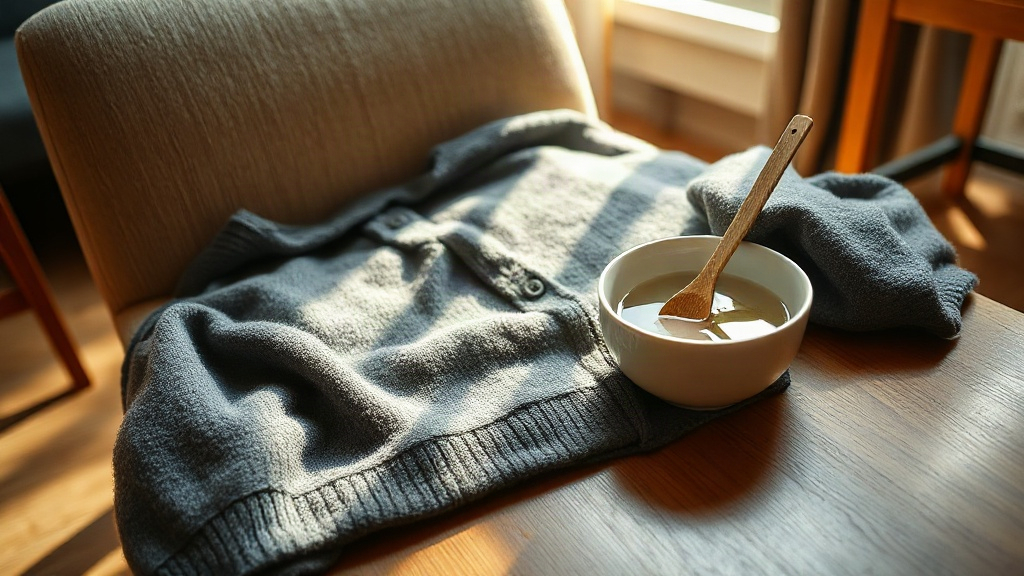
Wool fibres have microscopic cuticle scales that interlock when agitated or dried incorrectly, creating the stiffness you feel in a jumper that’s gone scratchy. This physical mechanism explains why your favourite wool jumper can transform from soft to sandpaper-like after a single improper wash.
As an Amazon Associate we earn from qualifying purchases. This page contains affiliate links — if you buy through them, we earn a small commission at no extra cost to you.
You pull on that jumper and find it tight, rough, and somewhere between uncomfortable and unwearable. It’s a specific kind of disappointment—you’ve spent money on this, worn it for years, and now it sits at the back of the wardrobe because putting it on feels like a punishment.
The stiffness in wool is often fixable. It’s typically caused by heat shrinkage or detergent residue, not a fundamental flaw in the garment. The remedies people reach for first (dousing it in vinegar, a hot wash, vigorous rubbing) are likely to make it worse.
This guide is for UK households who want to rescue a stiffened wool or cashmere jumper at home—without spending money on a specialist cleaner until it’s genuinely necessary. It covers why the stiffness happens, which tools you need, a step-by-step rescue method that works, and when the garment has crossed into permanent damage.
Understanding Wool Fibre Stiffness
Under a microscope, wool fibres reveal overlapping fish scales. These scales trap air, wick moisture, and hold the fabric’s structure. Heat and agitation cause them to lift and interlock permanently—a process called felting. A felted fibre doesn’t just shrink; it goes rigid, losing its natural give and becoming rough against the skin.
📺 Watch: How to Soften Scratchy Acrylic or Wool Yarn - What’s the Best Way?
Several factors can cause a wool jumper to stiffen:
Heat from tumble drying. This is common. A heat cycle can cause fibres to tighten and scales to lock together. The jumper may look smaller and feel dense and rough. The fibres might still be intact underneath but compressed into a tighter configuration.
Residue from detergents. Standard biological detergents are designed to break down proteins, and wool is a protein fibre. Using them repeatedly can strip natural lanolin that keeps fibres lubricated. The fabric doesn’t shrink but loses softness and feels stiff or papery.
Mechanical abrasion. Even on a wool cycle, machine washing subjects fibres to more agitation than hand washing. Over time, this roughens the fibre surface and causes pilling, making the fabric feel coarser.
Vinegar doesn’t fix fibre damage. The internet loves vinegar hacks for scratchy wool, but vinegar is an acid that works on odours and limescale—it doesn’t repair lifted scales or restore natural oils. It can temporarily soften water if mineral deposits contribute to stiffness, but it’s not the fix people imagine.
If your jumper feels like a solid, inflexible block—not just stiff but locked together—the fibres have felted. That’s a different problem we’ll address.
What You’ll Need (UK Household Friendly)
You don’t need specialist equipment. Most homes have what’s required:
- A clean basin, sink, or large bowl—plastic avoids scratching fibres
- Lukewarm water—around 30°C, hand-hot but not steaming
- A tablespoon of hair conditioner—plain, uncoloured, not a 2-in-1—or a specialist wool detergent like Eucalan
- A clean towel for reshaping
- A flat drying surface—a drying rack, clean towel on the floor, or bed
If you’ve got conditioner in the bathroom cabinet, you’re set. Eucalan and The Lab Co. Cashmere & Wool Laundry Detergent, 500 ml (paid link) are worth considering for regular wool washing but aren’t essential for a one-off rescue.
See The Lab Co. Cashmere & Wool Laundry Detergent, 500 ml on Amazon → (paid link)
How Conditioner Works on Wool
Wool fibres have scales that catch on each other, causing scratchiness. Hair conditioner contains cationic surfactants—similar to fabric softeners but without perfumes and heavy oils that coat wool fibres and reduce breathability. Conditioner smooths down raised scales, reducing friction between fibres. Many conditioners are mildly acidic, which helps close wool scales—the opposite of what heat does.
📺 Watch: Softening Wool with Conditioner
The Soak and Reshape Method
Here’s the practical rescue approach.
Prepare the soak. Fill your basin with lukewarm water and add roughly a tablespoon of hair conditioner. Swirl until the water looks slightly milky.
Submerge and wait. Push the jumper under the water and leave it for about 30 minutes. Don’t agitate, rub, or swirl it. The fibres need time to absorb conditioner and for scales to relax. Movement causes friction—avoid it.
Drain and squeeze. Lift the jumper out and gently squeeze excess water. Don’t wring it—twisting fibres can cause new felting. Lay it in the empty basin and press with your palms if there’s lots of water.
Reshape on a flat surface. Lay the jumper on a clean towel and gently pull it back to original dimensions. This step matters most for shrunk jumpers: work shoulders, sleeve length, and body width back to where they should be. The fibres are relaxed from the soak, giving you a window to reshape.
Allow to air dry. Lay the jumper flat on a drying rack or clean towel, away from direct heat or sunlight. Don’t hang it—wet wool stretches under its own weight, undoing your reshaping. Use only low heat if the care label allows. Turn once or twice as it dries to prevent one side stiffening.
Results vary with damage level. A jumper stiff from detergent residue often feels markedly softer after one soak. A heat-shrunk jumper might need multiple attempts and may not fully return to original size—compressed fibres have memory but limited elasticity. The more often tumble-dried, the less likely full recovery.
If fibres still feel rough after two conditioner attempts, damage may be beyond home remedy.
For regular wool washing, Eucalan is a no-rinse wool wash that keeps fibres soft without the rinsing step. It’s not cheap, but a little goes far.
Recognising Permanent Damage
Not every jumper can be saved. The conditioner method works best on stiffness from detergent residue or mild heat compression. It cannot reverse felted wool.
Test by gently pinching a small fabric area between your fingers. If fibres move independently—you feel them shifting slightly—there’s structure to work with. If the fabric feels like a solid, immovable sheet, fibres have locked together permanently. That jumper has felted; soaking won’t separate fused fibres.
If the jumper is felted, don’t try to stretch it. Force-stretching can tear fibres, distort shape permanently, and damage knit structure beyond repair. It turns a damaged-but-stable jumper into a ruined one.
Felted wool makes excellent craft material. It felts further with hot water and agitation, meaning you can cut it and edges won’t fray much. Consider pet toys, draught excluders, or felted wool jewellery. With sentimental attachment, donate to a school or community craft group.
For delicate or valuable garments—a cashmere piece, vintage knit, anything you’re not confident treating—a specialist dry cleaner is worth considering as a last resort. They may have specialised equipment and processes beyond a bathroom soak. Ask for a quote and whether restoration is possible; a reputable cleaner will be honest if it’s beyond saving.
Comparing Wool Care Products
| Feature | Standard Biological Detergent | Hair Conditioner | Specialist Wool Wash (e.g. Eucalan) |
|---|---|---|---|
| Primary Action | Breaks down proteins | Smooths fibre scales | Lubricates fibres without rinsing |
| Effect on Wool | Strips natural oils | Restores softness | Maintains natural oils |
| Residue Risk | High (builds up) | Low (no rinse needed) | Low (no rinse needed) |
| Best For | General cottons | Stiff or scratchy wool | Regular wool maintenance |
| pH Level | Alkaline | Mildly acidic | Neutral to slightly acidic |
Common Questions Answered
Can I machine wash a wool jumper?
Follow the care label. If it says machine washable, use a wool or delicates cycle with cold water and a laundry bag. For hand wash only labels, the machine poses risks. Agitation and temperature variation in machines—even gentle cycles—exceed basin soak levels, plus other items in the load add risk.
Does fabric softener help wool?
No—it can worsen things. Fabric softener contains perfumes and conditioning agents for cotton and synthetics. On wool, these compounds can build up on the fibre surface, potentially leaving residue that attracts dirt and reduces breathability. It might feel softer briefly, but the effect doesn’t last. Use hair conditioner in a soak or a specialist wool wash like Eucalan instead.
Preventing wool jumper shrinkage
Wash in cold or lukewarm water by hand, never tumble dry, reshape while damp, and dry flat. If using a machine, employ a laundry bag on the wool cycle with specialist detergent. Lay flat to dry as instructed on the label—this keeps fibres from contracting as they dry.
The core is clear: most wool stiffness comes from heat or residue, and a 30-minute soak with hair conditioner addresses both. It won’t fix felted fibres or undo years of neglect in one session. But for a jumper stiff from a tumble-dry mishap or harsh detergent, it works with the fibres rather than against them.
A jumper softened by this method will stiffen again if the underlying wash routine isn’t adjusted. For the correct routine to protect your work, see our Delicate Fabric Care Guide: How to Wash Cashmere, Wool and Silk at Home .
Grab our free Stain Removal Cheat Sheet to keep the full rescue protocol handy for next time something goes wrong with the laundry.
Sources & Further Reading
As an Amazon Associate we earn from qualifying purchases. The products linked above are ones we think are worth a look.
Note: General guidance only, verify details with a qualified professional or official source.