How to Fix a Shrunk Jumper and Prevent Clothes Shrinking: Complete Guide
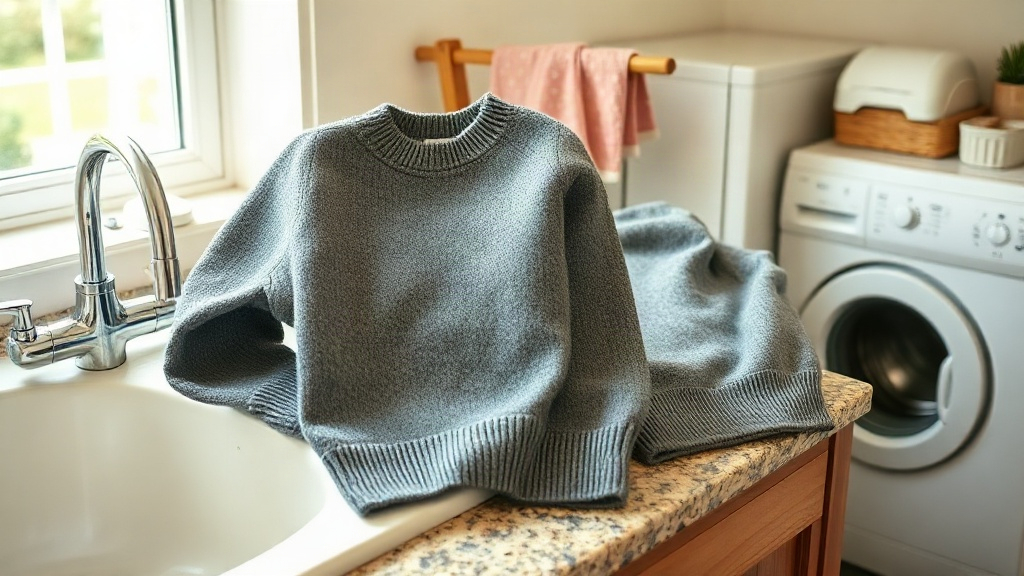
Wool fibres begin to felt irreversibly at around 40°C with sustained mechanical agitation—the point where microscopic scales on each fibre lock together permanently. This physical threshold separates salvageable shrinkage from permanent damage.
As an Amazon Associate we earn from qualifying purchases. This page contains affiliate links — if you buy through them, we earn a small commission at no extra cost to you.
You pull your favourite knit from the tumble dryer expecting that soft, relaxed feel—and instead find it’s come out several sizes smaller. The merino jumper you’ve had for years has tightened across the shoulders. The panic is immediate: is it ruined for good?
It might not be. But it depends entirely on what happened to the fibres, and understanding that distinction is what separates the jumpers that can be saved from the ones that genuinely can’t. This guide explains exactly why shrinking happens, how to attempt a rescue, and—more importantly—how to stop it happening again.
Understanding Wool’s Physical Structure
Shrinkage is not simply fabric getting smaller. It’s a structural change in the fibre caused by a process called felting.
Wool fibres are covered in microscopic overlapping scales—think of them as tiny hooks running along the length of each strand. Under normal conditions these scales lie flat and the fibres slide past each other freely. But when heat, moisture, and agitation combine—the exact conditions inside a hot wash or aggressive tumble dryer—those scales catch on each other. The fibres migrate along their length and lock together, drawing the fabric in.
Once those scales are fully interlocked, the structure is permanently changed. The only way to get length back is to relax those fibres enough to reshape them—and even then, you’re not reversing the damage, you’re working around it.
There’s a second kind of shrinkage worth knowing about. During manufacturing, wool fabrics are often stretched over frames to dry. That tension is held in the fibres. A single wash in cool water with gentle handling can release that stored stretch—this is called relaxation shrinkage, and it’s fully reversible. The warm water and conditioner method below works on this kind of contraction. What it cannot do is unmesh scales that have already felted together.
The honest answer is that once a wool jumper has gone stiff or visibly changed texture—not just smaller but denser, tighter, less pliable—the felting has probably progressed past the point where a home soak will fully restore it. Guidance from fabric care specialists emphasises that while the method relaxes fibres, severe felting doesn’t reverse.
Attempting a Rescue: The Conditioner Method
This is worth attempting if the garment is slightly smaller but still pliable—the fibres haven’t fully locked yet. It’s a low-cost, low-risk approach, and even if it doesn’t fully restore the original size, it usually helps.
Here’s what to do:
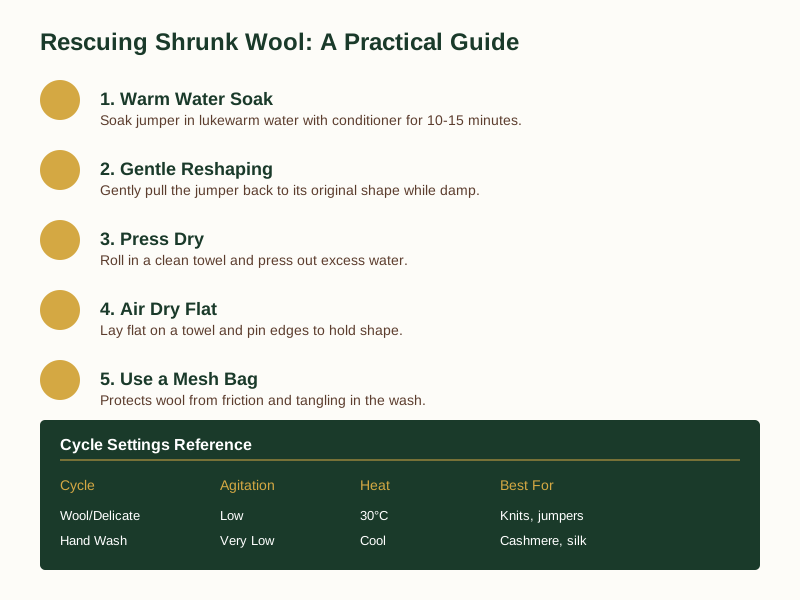
- Fill a basin or sink with lukewarm water—comfortably warm to the touch, not hot. Hot water triggers more felting, which is the opposite of what you want.
- Add a small amount of very gentle conditioner or baby shampoo. Something intended for hair works because it’s designed to soften protein fibres, which is exactly what wool is. Some no-rinse delicate washes are formulated specifically to condition without requiring a full rinse that stretches the fibres again. A budget alternative is plain washing-up liquid used sparingly.
- Fully submerge the jumper and leave it to soak for 10–15 minutes. Don’t agitate it.
- Gently press the water out—don’t wring or twist. Rolling it in a clean towel and pressing is the right move.
- Lay it flat on a dry towel. Starting from the seams and edges, gently work it back to its original dimensions. Pull lengthwise, not widthwise—wool stretches more easily in one direction than the other.
- Pin the edges with something that won’t mark—dress-making pins work, or you can use books as weights.
- Leave it to air dry flat. Do not hang it. Hanging stretches the wet weight of the fabric downwards and creates the very saggy, misshapen look that people then panic about on top of everything else.
The reshaping step is where most of the work happens. The water and conditioner soften the fibres; your hands do the actual restoring. If the garment is stiff or matted to the touch, stop here and move to the next section.
Some people find that even when the length hasn’t fully returned, specialist wool washes leave fibres feeling softer afterwards. Whether that’s worth keeping the garment in wearable condition is a call only you can make.
It’s important to note that you should never put a shrunken jumper in the dryer to stretch it out. Heat and tumbling are exactly what caused the felting in the first place, and doing so will make the shrinkage worse. Some people also ask if vinegar can help unshrink a jumper. While vinegar can act as a secondary treatment to soften fibres slightly, it’s not a standalone fix and should not be expected to succeed where the conditioner method alone didn’t.
Preventing Shrinkage Before It Starts
Here’s the thing about prevention: it works. Consistently. And unlike the rescue method, it doesn’t depend on how badly the damage has set in, because it stops the felting process before it starts.
Reducing agitation is the most effective step. Wool scales interlock because something moves them against each other repeatedly. A standard cotton cycle—with fast spin and lots of drum movement—can felt wool fibres. Switching to the wool or delicate cycle on your machine uses slower, shorter movements and significantly less mechanical stress.
Heat is the second trigger. Even a 30-degree wash can felt wool if the agitation is high enough, which is why temperature alone isn’t the full answer. What you need is both low heat and low agitation together.
Three practical steps that make the most difference:
- Turn the garment inside out before washing. The outer surface of a knit takes all the friction from the drum. Inside-out washing significantly reduces the abrasion the visible side experiences.
- Use a mesh washing bag. The bag takes the brunt of the drum movement and keeps the garment from tangling with zips, hooks, or heavier items. A pack of mesh bags represents good value and lasts for years.
- Wash separately from other items. Not just by cycle—by load. Wool tangled with a heavy towel or a pair of jeans gets pulled and twisted in ways that apply stress across the whole knit. Solo or small-group wool washes eliminate this entirely.
On detergent: standard biological detergents contain enzymes that break down proteins—and wool is a protein fibre. Enzyme-based cleaners can weaken wool fibres over time even if they don’t cause immediate visible damage. A wool-safe or delicate laundry liquid avoids this. Ecover Delicate Laundry Liquid, Waterlily & Honeydew, 750 ml (paid link) is one option that’s widely available, gentle, and eco-friendly.
Check Ecover Delicate Laundry Liquid, Waterlily & Honeydew, 750 ml price → (paid link)
Dry flat, always. Not on a hanger while wet, not draped over a radiator. Flat on a clean surface where air can circulate underneath. For thicker knits, turning once or twice during drying helps prevent the underside from staying damp and developing that flattened, musty texture.
When Rescue Isn’t Possible
Not every jumper comes back. If the fibres have gone stiff and dense—if the knit has lost its give and become board-like to the touch—the felting is too advanced for the conditioner method to make a meaningful difference. Continuing to soak and stretch at this point risks damaging the fibres further without changing the outcome.
When that happens, the practical move is repurposing rather than mourning. A felted wool jumper makes excellent dusters, cleaning cloths, or draught excluders. Some people cut them into patches for repairing other garments, or felt the fabric down further for craft projects. Others pass them on—a heavily felted knit still keeps someone warm, even if it’s no longer a cardigan.
There’s no method that reliably restores fully felted fibres. Knowing the difference between a garment that’s been relaxed and one that’s been felted is what lets you stop investing effort in the wrong outcome.
Wool Care Cycle Comparison
| Cycle Type | Agitation Level | Heat Setting | Best For |
|---|---|---|---|
| Standard Cotton | High | 40°C+ | Heavy cottons, towels |
| Wool / Delicate | Low | 30°C | Knits, jumpers, delicate fabrics |
| Hand Wash | Very Low | Cool | Cashmere, silk, heavily shrunk items |
| No Heat / Air Dry | None | N/A | Post-rescue reshaping, flat drying |
Your Jumper’s Status: Next Steps
The outcome for your shrunken jumper falls into one of three categories:
📺 Watch: How to Fix a Jumper You’ve Shrunk in the Wash
Jumper is salvageable — If the fibres remain pliable and the shrinkage is mild, start with the conditioner method described above. For detailed step-by-step guidance, see How to Stretch a Shrunk Jumper Back to Size .
Jumper is borderline — If the garment feels stiff but you’re unsure, attempt the conditioner soak but stop if resistance is significant. Our guide My Wool Jumper Shrunk — Can It Be Fixed? helps assess whether further effort is worthwhile.
Jumper is gone — If the fibres are densely felted and board-like, focus on prevention for future garments. How to Stop Clothes Shrinking in the Wash or Dryer covers the reliable strategies.
If you’re dealing with other laundry mishaps at home—a stain that’s just happened, a garment that needs careful hand-washing, or fabric that’s started to pill—grab our free Stain Removal Cheat Sheet . It’s a quick reference guide to handling the most common fabric emergencies before they become permanent ones.
Explore More Topics
Quick answers:
Go deeper on specific topics:
- My Wool Jumper Shrunk — Can It Be Fixed?
- How to Stretch a Shrunk Jumper Back to Size
- How to Stop Clothes Shrinking in the Wash or Dryer
- Why Do Clothes Keep Shrinking Even on a Cold Wash?
- How to Unshrink Cotton Clothes
As an Amazon Associate we earn from qualifying purchases. The products linked above are ones we think are worth a look.
Note: General guidance only, verify details with a qualified professional or official source.