How to Remove Blood Stains from Clothes (Fresh or Dried)
As an Amazon Associate we earn from qualifying purchases. This page contains affiliate links — if you buy through them, we earn a small commission at no extra cost to you.
Blood’s proteins permanently bond to fabric fibres at around 40°C – the temperature of a hot tap. That’s why heat is the worst first response to any blood stain.
You’ve just nicked your finger on a kitchen knife and wiped it on your best white shirt. Your instinct is to grab the hottest water you can find and scrub hard. Don’t. The good news is that cold keeps blood’s proteins fluid and washable. The method changes significantly depending on whether the stain is fresh or has dried in, and that’s where most people go wrong.
Here’s what actually works for both scenarios, and why.
The Golden Rule: Cold Water First
Every blood stain — fresh or old — starts the same way: cold water, no exceptions.
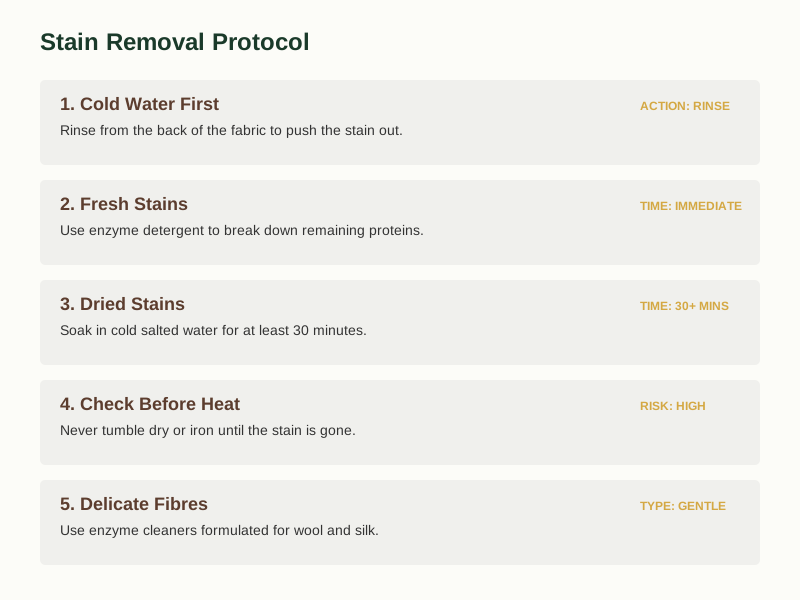
Rinse the stain under cold running water, working from the back of the fabric. This pushes the blood out through the weave rather than driving it deeper into the fibres. Dab gently with a clean cloth or kitchen paper rather than scrubbing. Scrubbing spreads the stain and works the protein further into the fabric, making it harder to shift.
Blood contains haemoglobin and albumin — proteins that are liquid at body temperature and begin to denature as soon as they hit heat above around 40°C (as confirmed by stain chemistry sources). Once denatured, they bond chemically to fabric fibres. No detergent or product reliably reverses this. Prevention through cold water is the only reliable approach.
So the checklist is straightforward: cold water, dab (don’t scrub), and no heat until you’re certain the stain is gone.
Fresh vs. Dried: The Science Changes What You Do
These two scenarios need different handling, and the difference is in the biochemistry.
Fresh stains are still wet and mostly liquid. Cold running water flushes most of the haemoglobin out before it can bond to anything. An enzyme-based laundry detergent — one that lists protease or “protein enzymes” — breaks down what remains. Rinse, treat, wash on the coldest cycle the fabric care label allows.
Dried stains have already begun to bind to fibres. The instinct to soak in hot water is the worst thing you can do — heat finishes the job the proteins started. Instead, the correct first step is to soak in cold salted water: roughly one tablespoon of table salt per litre of cold water, left for at least 30 minutes (as recommended by Persil UK).
Salt creates a hypertonic solution that draws moisture — and haemoglobin — out of the fibres without adding heat. After soaking, the stain will have loosened enough for an enzyme pre-treatment to work. Products like Dr. Beckmann Stain Devils Blood, Milk & Protein, 50 ml (paid link) contain protease enzymes that digest the protein bonds directly, so follow the treatment time on the pack. Apply to the damp stain, then wash cold.
See Dr. Beckmann Stain Devils Blood, Milk & Protein, 50 ml on Amazon → (paid link)
What about hydrogen peroxide? It can work on white fabrics, but it bleaches the haemoglobin along with the colour. On coloured clothes, it’ll bleach the dye too (as noted in product guides). Always test on an unseen area first, like an inner seam. For delicate fibres like wool, enzyme cleaners are typically the better choice. On coloured fabric, hydrogen peroxide should only be used with extreme caution as it can lighten the dye; an enzyme cleaner is the safer bet. Vinegar can help on delicate fabrics where bleach or peroxide would be too harsh, but cold water and enzyme treatment are generally more effective for blood specifically. The question of whether hot water ever helps has a clear answer: only if the stain is completely fresh and you’re adding detergent that works better in warm water — and even then, “warm” means hand-hot, not hot. The moment blood has been sitting for more than a few minutes, heat starts to set it. For dried stains, hot water makes everything worse. The science is unambiguous: heat denatures the proteins and bonds them to the fibre permanently. Cold is always the safer starting point.
What About Heat? (Washing and Drying)
This is where blood stains become permanent. Multiple stain-removal guides confirm that hot water and heat permanently set blood stains by coagulating proteins.
A 60°C wash cycle, a tumble dry, or even ironing over a damp blood mark will denature whatever protein remains and bond it irreversibly to the fibre. The stain turns brown and will not shift. Once heat has set a blood stain, nothing reliably removes it — not bleach, not peroxide, not repeated washing. The garment is effectively done.
Before you put anything in the washing machine, check the stain under good light. If you can still see it — even faintly — treat it again and wait. Only tumble dry when you’re certain it’s gone. The same applies to hanging on a radiator or using a heated airer: no heat until the stain is completely out.
This catches people out most often with school uniforms. A blood mark goes through a cool wash, looks lighter, gets bunged in the dryer, and comes out with a permanent brown shadow. Lesson: always check before heat.
How do I get blood out of a mattress?
Treat it the same way as fabric: cold water, enzyme cleaner, blot dry. Don’t soak the mattress — too much moisture leads to damp and mould. A spray bottle helps you apply treatment without oversaturating the filling. Do not use a hair dryer to speed drying; let it air with good ventilation.
Best Products for the Job
For fresh blood, cold water and a good enzyme detergent will often do the job on their own. For anything that’s had time to set, a targeted pre-treatment earns its place.
Dr. Beckmann Stain Devils Blood, Milk & Protein, 50 ml (paid link) is a widely available enzyme-based option in UK supermarkets and online. Enzyme treatments like this work best on fresh blood (school uniform mishaps, kitchen accidents), and a little goes a long way. They are weaker on dried stains and may need more than one go, so don’t expect the packet’s promises to hold for older marks. Think of it as a pre-wash spot treatment for things you’ve caught quickly, not a miracle for a three-day-old stain on a school jersey.
The honest budget alternative is cold salted water — you almost certainly have table salt in the kitchen, and the soak does real work loosening dried protein before any product touches the fabric. No specialist chemistry required.
If you’re treating delicate fibres, check the fabric care label before applying any stain treatment. Wool and silk can be damaged by enzyme products not formulated for them — a dedicated delicate wash is the safer starting point.
Blood Stain Removal: Fresh vs Dried
| Scenario | First Action | Key Ingredient | Time Required |
|---|---|---|---|
| Fresh Stain | Rinse under cold water | Enzyme-based detergent | Immediate |
| Dried Stain | Soak in cold salted water | Table salt | 30+ minutes |
| Delicate Fibres | Cold water rinse | Gentle enzyme cleaner | As needed |
| Mattress | Cold water treatment | Enzyme spray | Blot dry |
| Heat Risk | Check before drying | None | N/A |
📺 Watch: How to Remove Any BLOOD Stain From Clothing, Sheets, or Fabric
Next Steps for Your Stain
If you’re dealing with a fresh blood stain, start with cold water immediately. For dried stains, the cold salt soak is your first move. But if you’re unsure about the stain’s age or type — perhaps it’s a mix of substances or you’ve found an old mark — our Stain Removal Guide UK: How to Get Any Stain Out of Clothes covers the full range of approaches.
Save your shirt, check before you dry, and treat the stain before the fabric care label’s maximum temperature ever gets involved.
Sources & Further Reading
- NHS
- Persil UK stain removal guidance
- Dr. Beckmann product information
- Wirecutter stain removal guides
As an Amazon Associate we earn from qualifying purchases. The products linked above are ones we think are worth a look.
Note: General guidance only, verify details with a qualified professional or official source.