Stain Removal Guide UK: How to Get Any Stain Out of Clothes
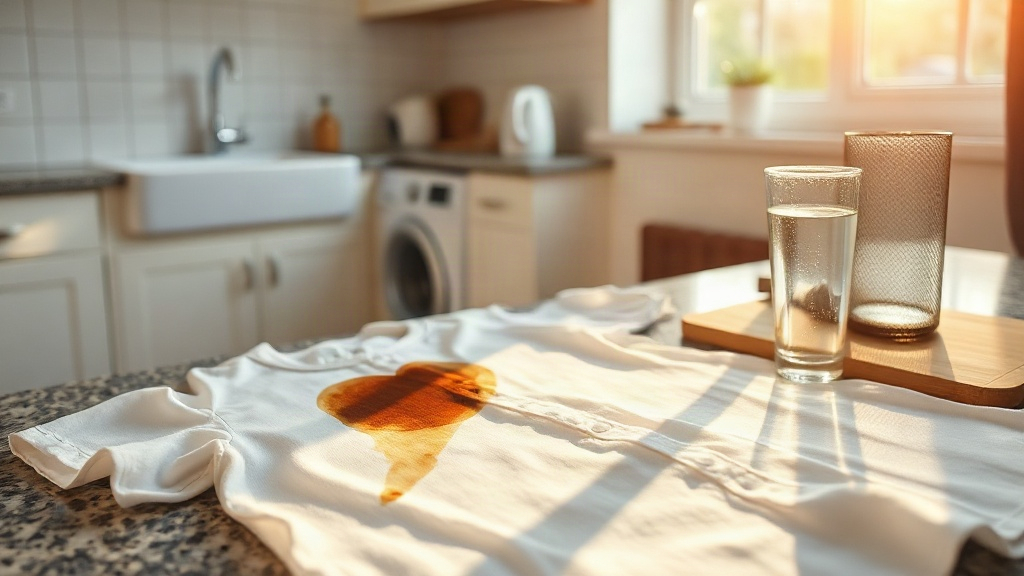
All common laundry stains fall into one of four chemical categories: protein, tannin, oil, or dye. Which category your spill belongs to dictates the treatment that will lift it — get this wrong and you risk setting the stain permanently.
Red wine on a white shirt. Thirty seconds ago it was fine. Now there’s a spreading stain and you’re late for work. This is the moment most people make the mistake that turns a fixable spot into a permanent mark. They reach for the nearest cloth and start scrubbing — or worse, they throw the whole thing in the wash, convinced a spin cycle will sort it. It won’t. Heat and agitation can set a stain in place. The machine wash that feels like action is often the thing that ruins the garment for good.
The good news is that stain removal isn’t complicated — but it is specific. The single most important factor isn’t the fabric. It’s the type of stain. Proteins, oils, tannins, and dyes all behave differently, and each responds to a different solvent. Get that right and you’ve solved the bulk of the problem. Get it wrong and no amount of scrubbing will save you.
This is the guide that tells you which solvent, which temperature, and what to do in the first sixty seconds. Bookmark it now — you’ll want it before the next spill.
As an Amazon Associate we earn from qualifying purchases. Some links on this page are affiliate links, which means we may earn a small commission if you make a purchase.
The Golden Rule of Stain Removal
Before anything else: the order of operations matters more than the product you choose.
📺 Watch: Blood Stain Removal Guide - Tips From A Dry Cleaner
Three rules, and they genuinely are non-negotiable:
Act fast. A fresh stain and a three-day-old stain are different jobs entirely. The longer a substance sits in the fibre, the more it bonds with the fabric. That red wine you noticed this morning but planned to deal with “later” has had hours to set. Later is harder.
Never wash or tumble dry first. This is the most common way a stain gets set for good. Washing in hot water — or worse, tumble drying — applies heat to the stain before you’ve treated it. Heat fixes proteins, sets dyes, and drives oils deeper into the fibre. The machine is the last step, not the first. Always treat the stain, then wash.
Pre-test every treatment. Dab a small amount of your chosen solvent onto a hidden part of the garment — an inside seam, the inside of a hem. Wait two minutes. If the colour runs or the fabric changes texture, stop. What works on cotton can bleach silk. Check first.
And yes, read the care label before you touch anything. It’s the only definitive guide for that specific piece of fabric, and it takes ten seconds.
These three steps alone prevent most of the permanent, set-in damage that turns a fixable stain into a lost cause. The products matter. The sequence matters more.
The 4-Step Chemistry Method
Here’s where most advice stops being useful. It tells you to “treat the stain” without explaining why one treatment works on blood and not on grease. The reason is chemistry.
Four steps. Learn them once and you’ll handle any spill.
Step 1: Blot — Don’t Rub
Press an absorbent cloth or kitchen paper firmly onto the stain. The aim is to pull liquid out of the fibre, not push it deeper. Work from the outside edge inward — this keeps the stain contained rather than spreading it across a wider area.
Rubbing is the instinct. It’s also wrong. Scrubbing tears the fibres and drives the stain deeper. Blotting is the only motion you want in the first sixty seconds.
Step 2: Identify the Chemistry
What is this stain? This is the question that determines everything that follows:
- Protein stains — blood, sweat, food, milk. The proteins in these substances can coagulate when exposed to heat, bonding tightly with the fibre. Hot water sets them. That’s why a hot wash is often the worst thing you can do.
- Oil-based stains — grease, butter, cooking oil, sauces with fat content. Oil doesn’t bond with water, so water alone won’t shift it. You need a surfactant — something that breaks surface tension and lets the oil lift away.
- Tannin stains — red wine, tea, coffee, fruit juice. Tannins are plant compounds that oxidise and darken over time. They respond to oxidisers and acids.
- Dye stains — ink, makeup, permanent marker. These aren’t stains in the same sense — they’re colour that’s bonded to the fibre. They need a solvent that dissolves the dye, not one that lifts a substance out.
Step 3: Apply the Right Solvent
Match the solvent to the stain chemistry:
| Stain type | First treatment | Temperature | What to avoid |
|---|---|---|---|
| Protein (blood, sweat) | Cold water + enzyme detergent | Cold only | Hot water, bleach |
| Oil (grease, butter) | Dish soap or grease remover | Warm/hot water helps | Cold water alone |
| Tannin (red wine, tea) | White vinegar or hydrogen peroxide | Cool | Rubbing |
| Dye (ink, makeup) | Isopropyl alcohol or dedicated ink remover | Room temp | Water first |
For protein stains, cold water isn’t a preference — it’s a requirement. Heat sets the protein permanently. Enzyme detergents (most biological laundry detergents) contain enzymes that break down protein chains, which is why they work on blood and food marks in a cold or 30°C wash.
For grease, dish soap genuinely outperforms most laundry detergents — it’s formulated as a degreaser. For heavy-duty grease removal, start with the dish soap before reaching for a specialist product.
For ink specifically: alcohol-based products dissolve the dye binder that holds the pigment to the fibre. Hairspray works in a pinch — the alcohol content does the job. A dedicated ink remover like Dr. Beckmann Stain Devils Pen & Ink, 50 ml (paid link) is more consistent, particularly on ballpoint pen, but speed matters more than the product. Fresh ink is often salvageable. Ink that’s been through a wash cycle is much harder to remove.
Buy Dr. Beckmann Stain Devils Pen & Ink, 50 ml on Amazon → (paid link)
Step 4: Rinse and Check
Rinse the treated area with cool water. Check whether the stain has lifted. If traces remain, apply the solvent again and wait before rinsing — some treatments need time to work. Only then can you put the garment through a wash cycle, and only on the temperature the care label specifies.
The rule of thumb: if the stain is still visible after treatment but before the wash, don’t put it in the dryer. Heat from a tumble dryer will set whatever remains permanently. Air dry and retreat if needed.
Now you know what to do — get the Free Stain Removal Cheat Sheet to keep the chemistry guide to hand for next time.
Household Staples vs. Specialist Products
The internet will sell you a £12 stain pen. The truth is that three items you already own will handle most everyday spills. Here’s the honest breakdown.
Baking soda paste (1 part water, 2 parts baking soda) works by absorption — paste it onto the stain, let it dry completely, then brush off. It’s slow but effective for general lifting, particularly on light fabrics. Budget option, genuinely useful.
White vinegar is an acid, which makes it useful for tannin stains and for deodorising. Adding a small amount of white vinegar to the wash may help with underarm deodorant buildup. Owners of delicates often mention it as a routine addition to the rinse cycle. It won’t shift set-in red wine on its own, but it’s a solid supporting player.
Dish soap (Fairy Original Washing Up Liquid, 1.45 L or equivalent) is a surfactant, which means it breaks the surface tension of water and lets it penetrate oily substances. For grease on cotton or synthetic fibres, it’s often more effective than a labelled stain remover.
Specialist products earn their place for specific situations. Dr. Beckmann’s Stain Devils bottles are labelled by stain family now — Pen & Ink, Blood Milk & Protein, Lubricants & Oils, Fruit & Drinks — and the formulation is usually more aggressive than a household staple. The trade-off is price and inconsistency. Results tend to vary: fresh stains respond well, dried-in stains are less reliable. Dr. Beckmann Stain Devils Fruit & Drinks, 50 g (paid link) gets recommended as a go-to for wine spills, but the same buyers acknowledge it can be messy to apply and isn’t guaranteed. Dr. Beckmann Stain Devils Lubricants & Oils, 50 ml (paid link) is effective on heavy-duty oil marks, though stubborn stains may need two or three applications.
Buy Dr. Beckmann Stain Devils Lubricants & Oils, 50 ml on Amazon → (paid link)
See Dr. Beckmann Stain Devils Fruit & Drinks, 50 g on Amazon → (paid link)
OxiClean Versatile Stain Remover Powder, 3 lb (paid link) is worth having for households dealing with grass, mud, food, and kids’ clothes — it soaks well and a little goes a long way. The Amazon listing is a 3 lb powder tub, not a small UK sachet. The catch is time: it needs a soak, ideally in warm water, before the wash. Not a quick fix for a spill you’re dealing with right now. Vanish Turbo Fast Acting Stain Remover Powder, 850 g (paid link) is the UK powder option, useful on sports kit and school uniforms, though it is inconsistent on older stains and the price-per-use adds up.
Check Vanish Turbo Fast Acting Stain Remover Powder, 850 g price → (paid link)
See OxiClean Versatile Stain Remover Powder, 3 lb on Amazon → (paid link)
The honest verdict: for everyday grease, a cheap bottle of Fairy Original Washing Up Liquid, 1.45 L is often more effective than a £5 specialist stain pen. For a red wine emergency, reach for white vinegar first and a dedicated product second. For anything that’s sat for more than a day, accept that results will be uncertain regardless of what you spend.
Rescue Guides by Stain Type
Red Wine
Blot immediately — don’t wait, don’t rub. Press kitchen paper firmly and replace it as it absorbs. Once you’ve lifted what you can, apply white vinegar directly to the stain and continue blotting. White vinegar may help lift tannin stains. For heavier wines or larger spills, a dedicated red wine remover is worth having, but speed matters more than the product choice.
Don’t reach for salt, despite what the folklore says. It can work on a fresh spill, but it also risks damaging certain fabrics and the result is inconsistent. White vinegar is more reliable.
Ink
Blot — you know the drill by now. Then apply an alcohol-based product: isopropyl alcohol (surgical spirit), hand sanitiser with a high alcohol content, or hairspray. Work from the outside edge in. The alcohol dissolves the dye binder. Blot between applications rather than letting it dry on the surface.
Dr. Beckmann Stain Devils Pen & Ink, 50 ml (paid link) performs well on fresh ballpoint ink. It’s less reliable on gel pens, black ink, or anything that’s been washed. If it’s a school uniform situation and you’ve caught it quickly, it’s worth trying. If the ink has dried and been through a wash, the chances drop significantly.
Blood
Cold water. Only cold water for the initial flush. Hot water coagulates the protein and sets the stain — this is one of the most common mistakes, and it genuinely ruins the garment. Run cold water through the back of the stain (pushing it out rather than further into the fibre), then apply an enzyme pre-treatment or a dedicated blood remover. Let it sit for ten minutes before rinsing.
Dr. Beckmann Stain Devils Blood, Milk & Protein, 50 ml (paid link) is an enzyme treatment for fresh blood; it works better on recent stains than on anything that’s set. Cold water and patience remain the most reliable approach.
Check Dr. Beckmann Stain Devils Blood, Milk & Protein, 50 ml price → (paid link)
Grease
The error people make here is using cold water. Oil doesn’t respond to cold — it slides over it. Run warm water through the back of the stain, then apply dish soap directly and work it in with your fingers or a soft brush. Let it sit for five to ten minutes before rinsing.
For heavy-duty grease — motor oil, car lubricant, industrial marks — a dedicated grease remover like Dr. Beckmann Stain Devils Lubricants & Oils, 50 ml (paid link) is more targeted than dish soap. The feedback from buyers is that it works, but stubborn stains may need repeat applications.
Handling Delicate Fabrics
Here’s where the standard advice starts to fall apart. Wool, cashmere, and silk need a different approach — and a different mindset.
The enemies are heat and agitation. Wool fibres have microscopic scales that lock together when exposed to heat and friction — that’s felting, and it’s irreversible. Cashmere is even more sensitive. Silk can be weakened by harsh chemicals and wringing. If you’re treating a delicate, the margin for error is smaller.
Use cool water. Hand wash only unless the care label explicitly says otherwise. Use a specialist wool wash or a very mild detergent. Avoid harsh stain removers unless the care label permits them. Test everything on a hidden seam first. And if the stain is on a high-value item — a cashmere jumper, a silk blouse — and you’re unsure, take it to a dry cleaner. The cost of a professional treatment is usually less than the cost of ruining the garment.
One honest option nobody likes mentioning: sometimes the right answer is to accept the stain and move on. A small mark on a favourite wool scarf, worked around rather than treated aggressively, is often preferable to a hole where the stain used to be.
For those who want to treat at home, the approach is simple: cool water, gentle detergent, blot gently, and patience. Don’t wring. Don’t scrub. Don’t reach for bleach.
Your Stain Removal Questions Answered
📺 Watch: How to Remove Any BLOOD Stain From Clothing, Sheets, or Fabric
Can I use bleach on coloured clothes?
No — bleach (sodium hypochlorite) is a strong oxidiser that strips colour from fabric. It will lighten or remove the dye in your garment along with the stain. If you need an oxidiser for coloured clothes, use an oxygen-based bleach like Vanish or a dedicated colour-safe stain remover instead. Always check the care label first.
What if the stain doesn’t come out after washing?
Don’t dry the item. Heat from a tumble dryer will set whatever remains permanently. Instead, let it air dry and retreat the stain while it’s still damp — or wash it again with a pre-treatment. If the stain has survived a wash and dry cycle, it may be permanent, particularly if it was a dye-based stain or if it had time to set before you treated it. At that point, you’ve either tried everything reasonable or you’re looking at a specialist restoration service.
Is hairspray really a good ink remover?
It’s a reasonable emergency option when you don’t have anything else. The alcohol content dissolves ink dyes, which is the mechanism you need. But it’s inconsistent — formulation varies between brands, and it can leave a residue that itself needs cleaning. A dedicated ink remover like Dr. Beckmann Stain Devils Pen & Ink, 50 ml is more reliable for anything you care about keeping.
Finding the Right Fix for Your Stain Type
The stain removal puzzle isn’t really about products. It’s about chemistry and speed. Know what you’re dealing with, hit it fast, apply the right solvent — and whatever you do, don’t reach for the wash cycle first.
If you take one thing from this guide, let it be the order: treat, then wash. Everything else is details.
If you’ve got a specific stain right now — red wine, ink, blood, grease — you know what to reach for. Bookmark this page, share it with anyone who does the laundry in your household, and grab the Free Stain Removal Cheat Sheet to keep the quick-reference guide somewhere you’ll actually find it when you need it.
Most stains that look catastrophic in the first thirty seconds are fixable. The ones that aren’t are usually the ones that went through a hot wash before anyone touched them. You know better now.
Find Your Stain’s Chemical Category
Navigate the articles below by the type of stain you’re facing, not just alphabetically. This structure helps you apply the right chemistry first time.
Protein Stains (Blood, Sweat, Food)
- How to Remove Blood Stains from Clothes (Fresh or Dried)
- How to Remove Deodorant and Sweat Stains from Clothes
Tannin Stains (Red Wine, Tea, Coffee)
Oil Stains (Grease, Butter, Cooking Oil)
Dye Stains (Ink, Makeup)
Complex & Recurring Stains
- How to Remove Grass Stains from Kids’ Clothes
- Why Do Some Stains Come Back After You’ve Already Washed Them Out?
- Oxi Cleaner vs Stain Remover Pen vs Washing-Up Liquid: What Actually Works
Explore More Topics
Quick answers:
Sources & Further Reading
As an Amazon Associate we earn from qualifying purchases. The products linked above are ones we think are worth a look.
Note: General guidance only, verify details with a qualified professional or official source.