How to Remove Deodorant and Sweat Stains from Clothes

As an Amazon Associate we earn from qualifying purchases. Some links on this page are affiliate links, which means we may earn a small commission if you make a purchase.
The one thing to understand about yellow underarm stains is that they’re a purchase problem, not a wash problem. Switching from an aluminium-based antiperspirant to an aluminium-free deodorant prevents them entirely. That’s the real fix — everything else is damage control for stains that have already happened.
You’re holding a white shirt you’ve worn maybe ten times, and there’s a pale yellow crescent under each arm. It wasn’t there last month. You washed it on a 40°C cycle, used plenty of detergent, and it came out looking worse. The frustrating truth is that the stain isn’t actually from your sweat — it’s from your deodorant. And the more you wash the shirt in the usual way, the more it sets in.
This isn’t a mystery fabric defect. The chemistry is well understood, and once you know what actually causes the marking, the solution is straightforward. The catch is that the most commonly recommended home fix — white vinegar — often makes it worse. Here’s why, and what actually works.
Why Deodorant Stains Happen (And Why Vinegar Is Often the Wrong Fix)
The yellowing under your arms isn’t sweat. Sweat itself is mostly water and nearly colourless. What turns it yellow — and what makes the stain so stubborn — is the reaction between the proteins in your sweat and the aluminium compounds in most antiperspirants.
📺 Watch: The RIGHT Ways to Remove Clothes’ Sweat & Deodorant Stains
Many antiperspirants use aluminium chlorohydrate as their active sweat-blocking ingredient. When that compound meets the proteins and fatty acids in perspiration, it creates a reaction that bonds to the fabric fibres. Over repeated wears and washes, that bond builds up into the pale yellow or orange mark that no normal cycle seems to shift.
White marks on dark clothing are different. Those are usually dried deodorant residue — the product itself, not a reaction product. They’re easier to treat because nothing has chemically bonded to the fabric yet.
Here’s where the common advice goes wrong. White vinegar is acidic. The aluminium salts in antiperspirant are also mildly acidic. Applying vinegar to a stain that’s already been set by an aluminium-protein reaction may not break the chemical bond effectively. People often soak a stained garment in vinegar overnight and find the mark is more visible the next morning. That’s the mechanism at work — not bad luck, just chemistry doing what chemistry does.
For delicate fabrics, this matters even more. A cashmere jumper with a yellowed underarm is distressing precisely because the garment is expensive and the stain seems permanent. If you’re dealing with delicate fabrics, a specialist detergent is gentler and more predictable than experimenting with household acids.
The honest answer is that not every stain can be fully reversed, particularly if the garment has been through a hot wash multiple times after the staining occurred. But the right treatment at the right time makes a significant difference — and speed matters more than almost anything else.
The Science-Backed DIY Method: Baking Soda Paste
Baking soda — bicarbonate of soda — is alkaline. That matters here. Where vinegar adds acid, baking soda neutralises it. When you apply a bicarbonate paste to a deodorant stain, the alkaline chemistry breaks the bond between the aluminium-protein compound and the fabric fibres. It’s not a magic eraser, but it targets the actual mechanism rather than just scrubbing at the surface.
📺 Watch: How To Remove Armpit Stains From Shirts! DIY LAUNDRY HACK
Here’s how to do it properly:
Mix bicarbonate of soda with enough water to form a thick paste — something that holds its shape when you spread it, not a watery solution that runs off. Apply it directly to the stain and work it in gently with your fingers or a soft toothbrush. Don’t scrub hard; the chemistry does the work, not the pressure.
Leave it for at least one hour. This is the part where patience matters. A shorter treatment will lift fresher marks, but an hour gives the alkaline compound time to penetrate and break the bond properly. You can leave it longer if the stain is older — a few hours won’t hurt.
Rinse thoroughly with cool water, then wash as normal. Use a cool or warm wash rather than hot water because heat can set any residue that remains. Check the stain before tumbling dry — if it’s still visible, treat it again before drying, because a tumble dryer will bake in whatever’s left.
This method works best on cotton and cotton-blend fabrics. It’s safe for wool and cashmere too, provided you rinse extremely thoroughly — bicarbonate residue left in the fibres can cause irritation to sensitive skin next time you wear it. For silk, use a specialist delicate wash instead.
This method is most effective on fresh stains — the kind you notice before they’ve been through multiple washes. For older set-in marks, the paste will lighten them significantly but may not remove them entirely. That’s honest to say rather than promising a guaranteed result that depends entirely on how long the stain has been there.
The other advantage is cost. Baking soda is inexpensive and widely available. If this works, you’ve spent pennies and saved the garment.
When DIY Isn’t Enough: Commercial Stain Removers
There are two situations where the baking soda method reaches its limit: when the stain has been through multiple hot washes and set badly, or when you’re dealing with a regular rotation of work shirts and need something you can use consistently without a two-hour soaking window.
For those cases, a targeted commercial product is worth the spend.
Vanish Gold Oxi Action Concentrated Gel, 2.25 L (paid link) is a colour-safe wash gel that the listing says will lift stains and odours in a cold 30°C wash. It is a large bottle for the machine, not a little pre-treat pen. For a household going through work shirts every week, that is the format that earns its keep.
Check Vanish Gold Oxi Action Concentrated Gel, 2.25 L price → (paid link)
Dr. Beckmann Deo & Sweat Stain Remover, 250 ml (paid link) is the direct treatment for antiperspirant marks and yellowing. Use it on the stain before the wash, not poured into the drum. It is the one to keep for a coloured shirt, where you want a product aimed at deodorant rather than a general bleach-style gel.
See Dr. Beckmann Deo & Sweat Stain Remover, 250 ml on Amazon → (paid link)
HG Perspiration Stain Remover, 250 ml (paid link) is labelled for sweat and deodorant marks on white, dark and coloured fabric. It is a spot treatment. Follow the bottle; it is a concentrated liquid.
View HG Perspiration Stain Remover, 250 ml on Amazon → (paid link)
Now you know what to look for — Get the Free Stain Removal Cheat Sheet to keep the method and products on hand before the next laundry day.
Prevention: How to Stop Stains Before They Start
The most effective treatment for a deodorant stain is the one you never have to do. Prevention is straightforward, but it requires a habit change rather than a product purchase.
📺 Watch: How to Remove Armpit Sweat Stains
Let your deodorant dry completely before getting dressed. This sounds obvious, but most people apply it and get dressed immediately, while it’s still tacky. That’s when transfer happens — the product is liquid enough to migrate onto fabric and start its reaction with sweat the moment you raise your arms. Waiting a few minutes, or using a product that’s fast-drying, can reduce the risk of transfer.
Wash garments after wearing, not after a few days in the laundry basket. Leaving stains longer makes them harder to remove. A quick wash after a single wear, with a gentle detergent, is more effective than a heavy treatment after the garment has been sitting damp or crumpled for days.
For wool and cashmere, hand washing with a specialist delicate wash is gentler on the fibres and won’t strip the garment the way a standard detergent can. The Lab Co. Cashmere & Wool Laundry Detergent, 500 ml (paid link) is worth considering for anyone who wears knitwear regularly — it’s formulated to maintain the fibres while effectively cleaning them.
View The Lab Co. Cashmere & Wool Laundry Detergent, 500 ml on Amazon → (paid link)
The white-mark problem on dark clothes has a simpler fix: a slightly damp cloth removes dried deodorant residue before it builds up. It takes ten seconds and prevents the issue entirely.
Deodorant Stain Removal Methods
| Method | Best For | Key Action | Time Required |
|---|---|---|---|
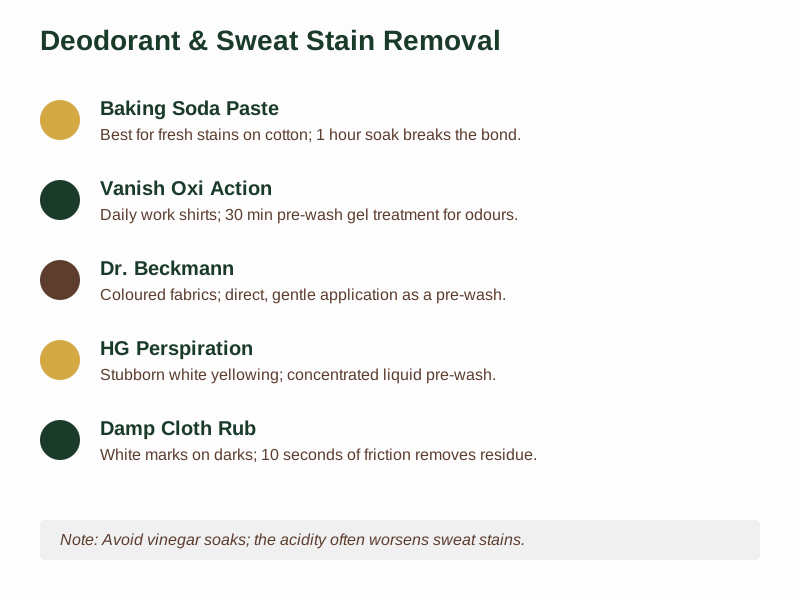
| Baking Soda Paste | Fresh stains on cotton & blends | Alkaline paste breaks bond | 1 hour soak |
| Vanish Gold Oxi Action gel, 2.25 L | Daily work shirts and sports kits | Colour-safe gel in a cold wash | Follow the bottle |
| Dr. Beckmann Deo & Sweat, 250 ml | Coloured or patterned fabrics | On the stain, before the wash | Pre-wash treatment |
| HG Perspiration, 250 ml | Sweat marks on white or coloured cloth | Spot treatment | Pre-wash treatment |
| Vinegar Soak | Not recommended | Acidic soak often worsens stains | Overnight soak |
| Damp Cloth Rub | White marks on dark clothes | Simple friction removes residue | 10 seconds |
| Specialist Detergent | Wool, cashmere & silk | Gentle pH balance for fibres | Hand wash cycle |
When to Stop Trying
If yellowing survives two full treatments, further soaking risks the fabric — retire the shirt to layering duty and treat the next one at the first sign. Our stain removal guide covers other common stain types.
Can I use bleach on deodorant stains?
Only on white cotton. Bleach may damage synthetic fibres like polyester and nylon, and it will strip coloured fabrics. If you’re treating a white cotton shirt and the stain is fresh, a dilute bleach soak is worth trying. For anything else, skip it.
Will the baking soda paste work on silk?
It’s safe for silk if you rinse extremely thoroughly, but for any silk garment you’re attached to, use a specialist delicate detergent instead. Silk is more reactive to pH changes than cotton, and bicarbonate paste is mildly abrasive. The risk of damage isn’t worth it on a fabric that costs what silk costs.
How do I remove white marks from black clothes?
White marks on dark fabrics are usually dried deodorant residue, not a chemical stain. The baking soda paste works here too, but for dark colours you can also try rubbing gently with a damp cloth immediately after noticing the mark — if it’s fresh residue and not a set stain, simple friction removes it before it bonds to the fibres.
The core of this comes down to understanding what you’re dealing with. Yellow underarm stains are a chemical reaction, not just dirt, and the treatment follows from the chemistry. An alkaline paste — bicarbonate of soda and water — breaks the bond that acid-based remedies like vinegar actually make worse. For fresh stains, that’s usually enough. For marks that have set through multiple washes, a targeted commercial treatment is the right call, and Vanish and Dr. Beckmann each serve a different need depending on whether you’re treating white or coloured fabrics.
Speed matters more than product. The moment you notice a stain is the moment to act. Set-in marks can be lightened significantly, but they’re not always fully reversible, and nobody wants to spend £15 on a stain remover for a shirt they wore six times too many.
If you’ve got a drawer of shirts with varying degrees of marking, the baking soda method is worth trying on the lightest ones first. For anything heavily stained, the commercial route is the honest call rather than four more failed attempts with the wrong approach.
Now you know what to try first — Get the Free Stain Removal Cheat Sheet to keep the full method on hand.
Related Guides
For a complete overview, see our Stain Removal Guide UK: How to Get Any Stain Out of Clothes .
Sources & Further Reading
As an Amazon Associate we earn from qualifying purchases. The products linked above are ones we think are worth a look.
Note: General guidance only, verify details with a qualified professional or official source.